Sixline wrasse

  Tropical reef fish

Identity card

Sixline wrasse

Scientific name:
Pseudocheilinus hexataenia
Family:
Labridae
Class:
Actinopterygii
Phylum:
Chordata
Year of description:
Bleeker, 1857
IUCN Status:
Least Concern
Distribution:

Indo-Pacific

Habitat:

From 2 to 35 metres deep.

Size:

8 to 10 cm.

Diet:

Small crustaceans, molluscs, worms, zooplankton.


The wrasse can rid Acropora corals of flatworms, parasitic worms that devour corals.

Guillaume, head of the tropical sector

A study conducted in Australia demonstrated the effectiveness of the dwarf wrasse in combating Prosthiostomum acroporae, parasitic worms that feed on Acropora corals.

Working alongside Lysmata vittata shrimp, the sixline wrasse was able to rid infected corals of adult worms, while the shrimp proved effective at detecting and removing worm eggs.

Did you know?

Where can I find the animal?

This species is found in small groups in coastal reefs among coral branches. It is also found in clear coastal waters, in dense coral habitats on reef ridges or shallow slopes down to a depth of about 20 m.

Close to coral reefs, this wrasse takes refuge in the corals at the slightest sign of danger.

How can you recognise it?

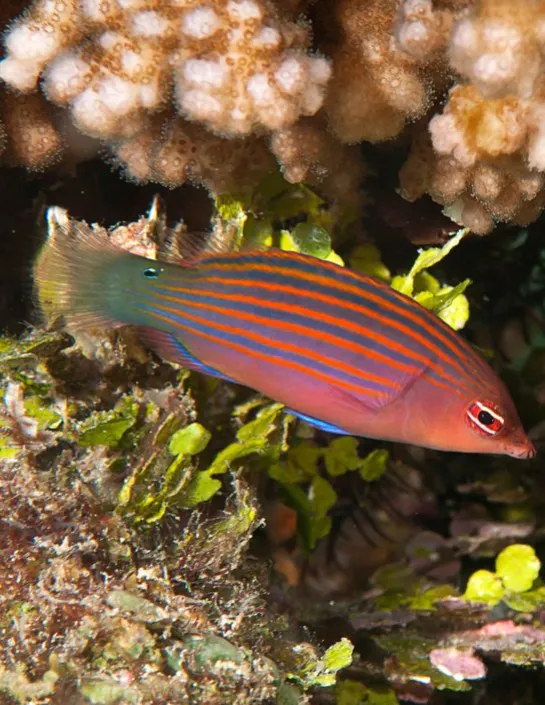
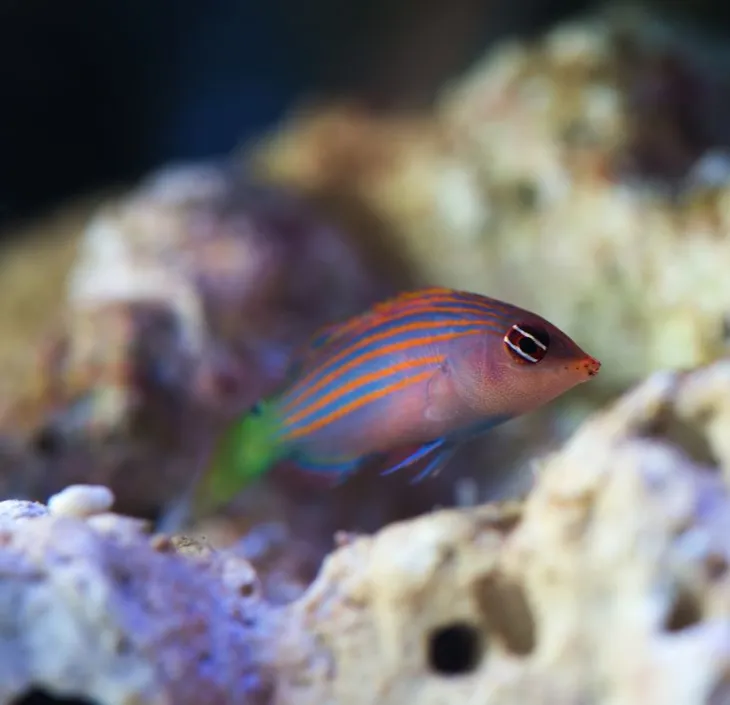
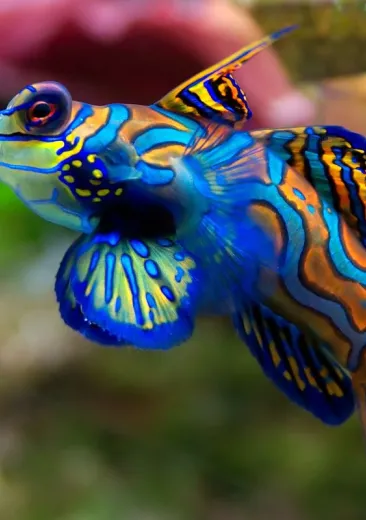
This small wrasse is characterised by its bright colours: its body ranges from purple to blue and is striped with six orange bands.

The caudal fin is green to yellowish in colour and is distinguished by the presence of an ocellus on the upper part.

Females are smaller than males.

What makes it special?

This small fish is characterised by the presence of an ocellus on its tail. This spot, which mimics an eye, is a decoy that confuses predators, who mistake the wrasse's head for the rear of its body.

Threats and protective measures

There are no specific conservation measures for this species.

Where can I find it at Nausicaá?

Mankind and shores

The Ocean Mag

Browse through our Ocean Mag

In the spotlight

À la découverte des animaux marins avec la Voix du Nord

Pour son podcast Les ch'tites histoires, la Voix du Nord a rencontré l'équipage de Nausicaá.

Article

10 things you need to know about coral

Coral, the planet's largest builder, is a fragile and threatened animal.

Article

Why don't young fish look like adults?

In some tropical fish, the changes between birth and adulthood are so great that it is difficult to identify the young.