Where can I find the animal?
The royal gramma is found in the western Atlantic from the Bahamas, in the Gulf of Mexico, along the northern Yucatan to north-western Cuba, and throughout the Caribbean Sea.
It lives in island coral reefs and tends to be found in areas with steep vertical relief, in groups of 10 to 100 individuals.
How can you recognise it?
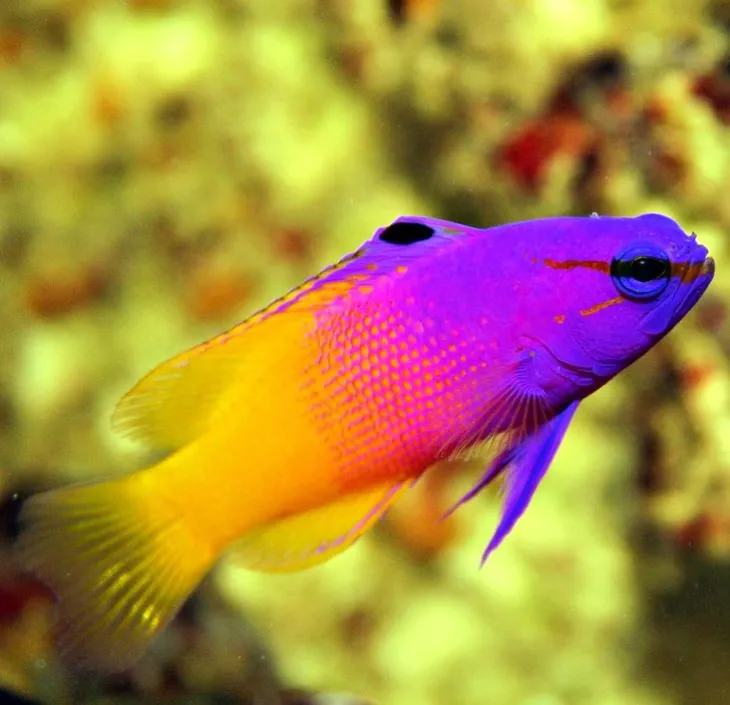
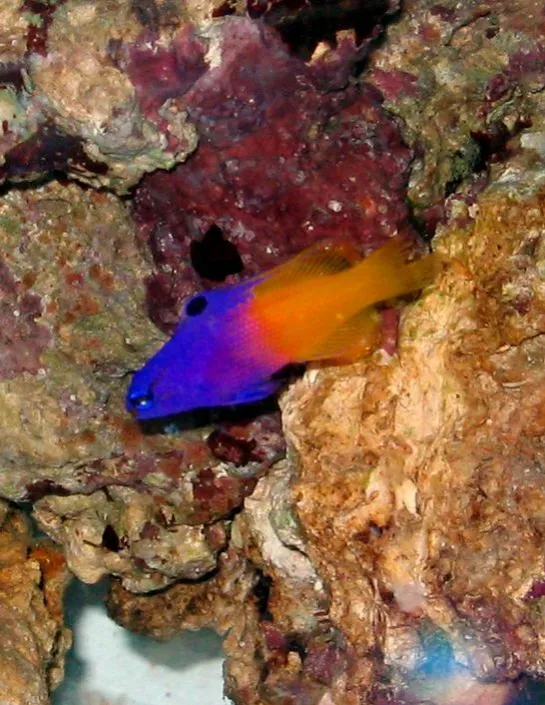
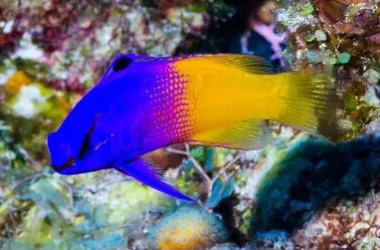
This beautiful little fish has a two-coloured body, with the front part being purple and the rear part yellow. A black bar crosses the eye and there is a black ocellus on the dorsal fin.
The male is larger than the female.
What makes it special?
Young birds are born sexually undifferentiated and then develop into one sex, which remains unchanged.
They live in small groups consisting of two males and several females and juveniles.
The males may prepare the nesting site, and the eggs laid in the nest are cared for by the males, who guard and maintain the nest until the eggs hatch.
Threats and protective measures
There are no specific conservation measures for this species.
As this species is one of the main components of the diet of the invasive lionfish, further research into the extent of this threat is urgently needed.