Coral 9mn
What is a coral reef?
Discover the coral ecosystem, an extraordinary garden under the sea.

Who hasn't dreamt of going to a tropical island and swimming in a lagoon, marvelling at the flamboyantly coloured fish and watching reef sharks from afar?
It starts with a polyp
But do we know that at the origin of this idyllic landscape, there is a small animal, a polyp that patiently multiplies and builds its limestone skeleton to form colonies of individuals that will create a reef?
This little animal is the coral, the builder of coral reefs.
The coral reef is therefore a natural structure, and in the case of Australia's Great Barrier Reef it can even be seen from space.
Not bad for a little polyp!
Who lives there?
Exceptional biodiversity
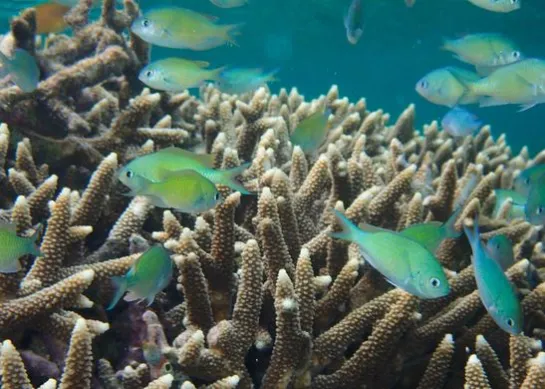
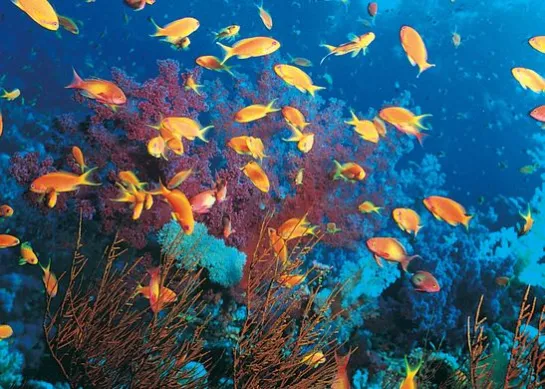
Reefs are home to some of the richest marine life on the planet. Coral reefs, which represent just 0.2% of the ocean's surface, account for 30% of known marine biodiversity.
They boast a record 1,000 species of coral, 25,000 species of molluscs and 8,000 species of fish and other vertebrates, as well as tens of thousands of other animals such as crustaceans, starfish, sea urchins and marine worms, not to mention rays and sharks.
How is the reef built?
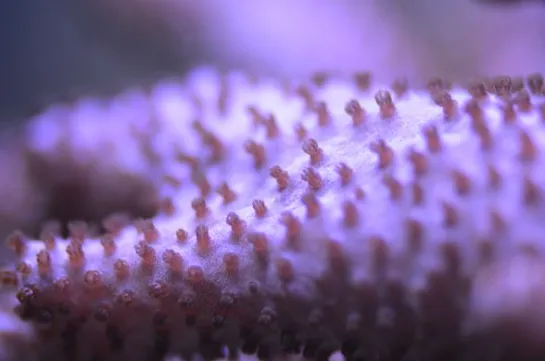
At its base is a planula, a coral larva which, after a pelagic phase, settles on a suitable substrate to develop and form a polyp. To generate its calcareous skeleton, the coral needs zooxanthella, a micro-algae that it shelters in its tissues.
This symbiotic relationship provides the coral with the nutrients it needs to form its skeleton. Photosynthesis by the algae produces carbohydrates and oxygen, while the algae consumes the carbon dioxide produced by the coral.
Birth of a reef
To develop, coral reproduces by budding, i.e. by forming an outgrowth that gives rise to a new polyp, a genetic clone of the first. Little by little, the reef grows, made up of thousands or even millions of individuals. The reef is therefore made up of several colonies of polyps.
Once a year, sexual reproduction takes place through the release of male and female gametes. The planulas are carried away by the current and those that settle on the seabed form a polyp and then a genetically distinct reef.
Coral reefs can take thousands or even millions of years to form and grow. The Great Barrier Reef has been developing for 20,000 years.
What is the reef ecosystem made of?
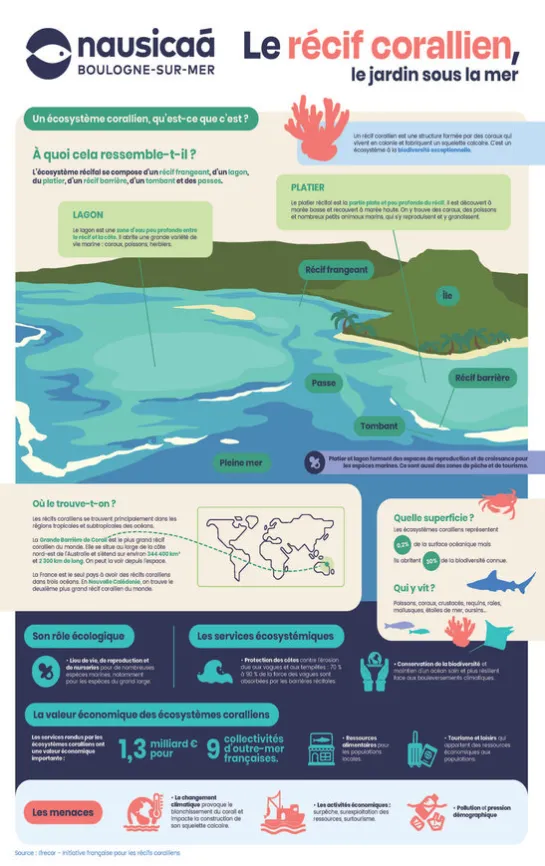
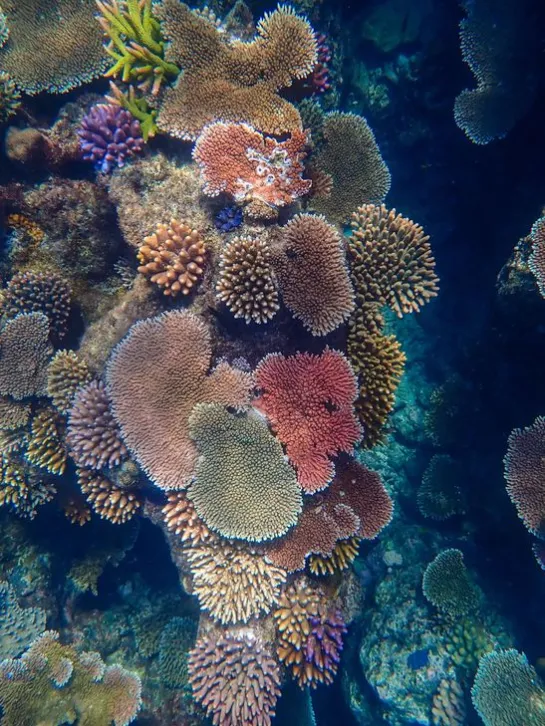
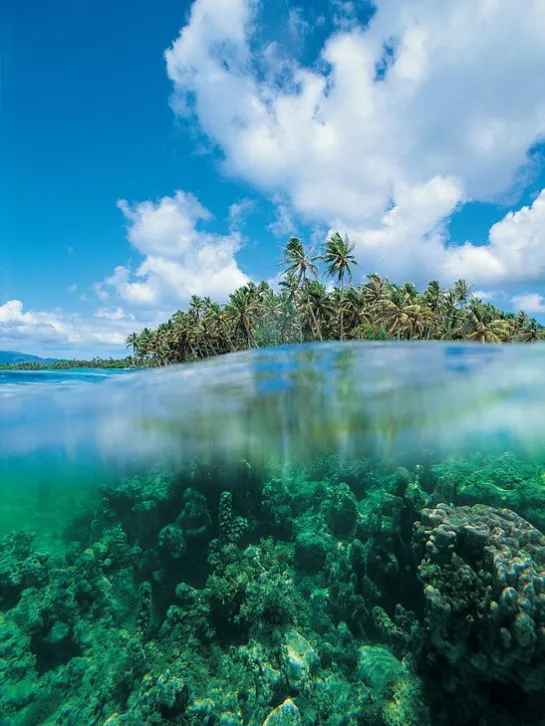
The coral reef and the species that live there are part of a reef ecosystem made up of a fringing reef, a lagoon, the flat, a barrier reef, a drop-off and passes.
Here is a short glossary to help you understand the different parts of this tropical environment.
Composition of a reef
Fringing reef
The fringing reef is located along the coast, close to the beach. This area of the reef is close to the surface of the water and is therefore easily accessible to swimmers equipped with masks and flippers. It provides natural protection against coastal erosion by absorbing the force of the waves.
Barrier reef
Located further from the coast, the barrier reef lies between the open sea and the lagoon, which it protects from the force of the waves.
Drop reef
It is found along a plunging reef or barrier reef and has a rapid, vertical descent towards the outside of the reef.
Reef flat
The reef flat is the generally shallow part of the barrier reef that is exposed at low tide and covered at high tide. The coral reef is home to a large population of fish and invertebrates, as well as being a breeding and nursery ground for certain marine species.
Lagoon, atoll and pass
Lagoon
The lagoon is a stretch of water between the barrier reef and the coast. Shallow, the lagoon is home to a rich biodiversity of coral, fish, seagrass and sometimes mangroves.
Like the shelf, it is a breeding and nursery ground for marine species, as well as a fishing and tourist destination.
Atoll
An atoll is a ring of coral formation that develops around islands.
Pass
The pass is an opening in the coral reef creating a passage between the lagoon and the ocean. This opening allows the movement of fish, animals and zooplankton between the two zones, as well as the input of nutrients and sediments. These movements also maintain the quality of the water in the lagoon.
Where can you find them?
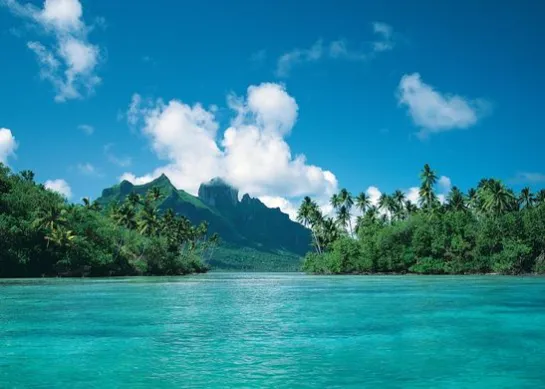
Coral reefs are found mainly in tropical and subtropical regions of the oceans, from the Indian Ocean to the South Pacific, via the Red Sea and the Caribbean Sea.
The Great Barrier Reef is the largest coral reef in the world. It is located off the north-east coast of Australia and extends over approximately 344,400 km² and 2,300 km in length.
France is the only country to have coral reefs in every ocean on the planet. New Caledonia's coral reef is the second largest on the planet. These reefs represent 10% of the world's coral reefs.
But corals can also be found at great depths and in cold waters.
Why are coral ecosystems important?
A home for biodiversity
Coral reefs are home to a wealth of biological diversity and provide the species that live there with an environment that is essential to their development: they are a place to live, but also to reproduce and nursery. Species from the open sea grow up there before reaching the open sea.
Valuable ecosystem services
The coral reef also offers many benefits to the people who live there. These are known as ecosystem services.
Ifrecor - the French Coral Reef Initiative - estimated in 2016 that the services provided by coral reef ecosystems amounted to €1.3 billion for 9 French overseas collectivities.
On a global scale, reefs are estimated to provide more than 375 billion dollars worth of goods and services, through fishing (which accounts for 9 to 12% of the world's fisheries), coastal protection, culture, tourism, leisure activities and the production of molecules of pharmaceutical interest. More than 500 million people depend on coral reefs for their survival.
Services rendered
- The coral reef is a natural barrier against waves. 70 to 90% of the force of waves is absorbed by reef barriers.
- Reef-building corals become carbon sinks as they grow, trapping carbon in their calcareous skeletons.
- Thanks to the wealth of marine species that live there, the coral ecosystem represents an essential food and economic resource for local populations.
- Finally, the attraction of these tropical landscapes is a source of income for the men and women who benefit from the development of tourism and leisure activities.
Coral ecosystem and climate change
Climate change has serious consequences for the future of coral reefs.
- The rise in surface water temperature causes episodes of coral bleaching. The stress causes the zooxanthellae to be expelled, and as they are expelled, the coral loses its colour, bleaches, weakens and can even die.
- Rising sea levels also have an impact on coral reefs. Their role as a natural barrier is said to be less effective against the force of waves and storms, which are exacerbated by climate change.
- Ocean acidification affects coral growth. The absorption of CO2 changes the chemical composition of the ocean, making it more difficult for the coral skeleton to calcify.
Other threats to the reef
Caribbean corals are suffering from declining populations of sea urchins and herbivorous fish, the main targets of fishermen. Fewer algal grazers allow algae to gain ground, covering the coral and blocking the light that zooxanthellae need for photosynthesis. The reduction in the number of large predators has encouraged an increase in these populations.
Other factors are also having an impact on the health of coral reefs: pollution, urbanisation, mass tourism, over-fishing and over-exploitation of resources. Coral diseases and the proliferation of corallivorous species such as the purple starfish Acanthaster planci also add to these threats.
What are the solutions for preserving coral reefs?
The situation of coral reefs is therefore critical. The 2019 Special Report on the Ocean and Cryosphere published by the experts of the IPCC (Intergovernmental Panel on Climate Change) estimated that 70% to 90% of coral could disappear if temperatures rise by 1.5°C between now and 2050.
This percentage would rise to 99% in the event of a 2°C temperature rise.
Positive action for coral
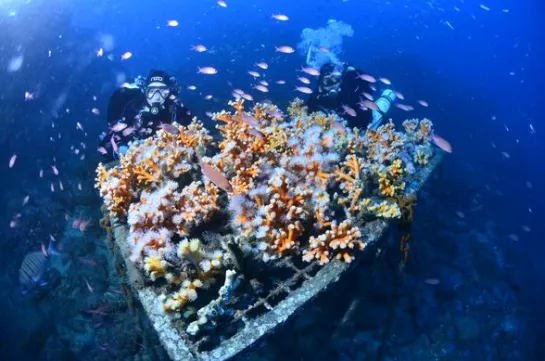
- Associations carry out actions in the field and restore coral reefs by using cuttings on artificial reefs that develop and attract marine life once again. These associations also work to raise awareness among local populations.
- Researchers are studying the reaction of corals to thermal stress and identifying certain species that are capable of resilience.
- Jérémy Gobé, a visual artist, is interested in coral and has developed a project to restore coral by combining art, science and industry. His Coral Resilience project is moving towards a test phase in a natural environment, in Colombia, by installing modular structures ready to receive coral cuttings.
- The World Coral Conservatory's mission is to become a bank of life, preserving the genetic heritage of coral species. Public aquariums, including Nausicaá, host samples of coral that they will grow and take cuttings from in order to preserve endangered species in the natural environment.
Photos : Dominique Mallevoy, Coco Tamlyn - Coral Guardian, iStock, Digital Vision
Discovering corals
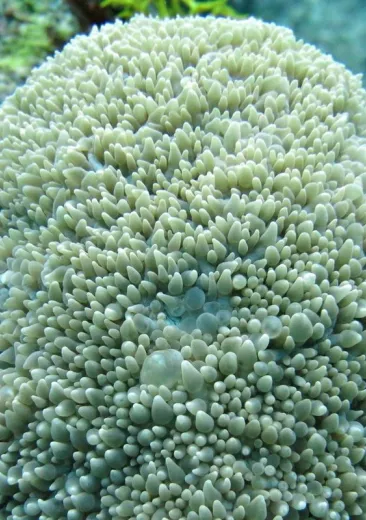
Pearl bubble coral
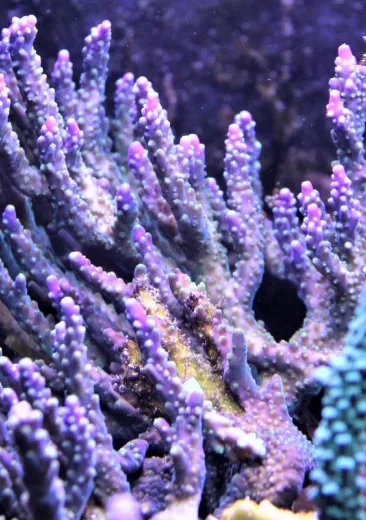
Acropora corals
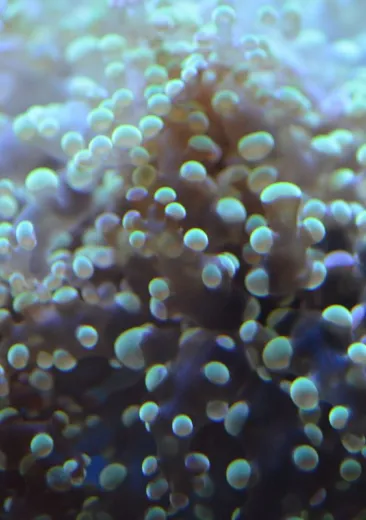
Euphyllia corals
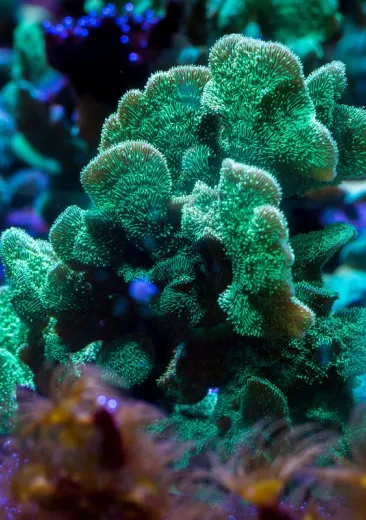
Potato chips coral
Other articles
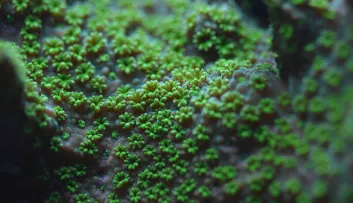
How does coral reproduce?
Coral 3mn
How does a coral polyp become a reef?
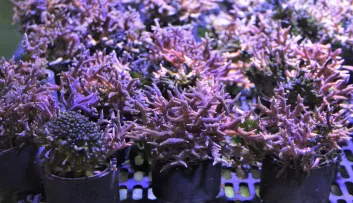
Nausicaá takes part in coral conservatio...
Coral 3mn
Public aquariums, working together to preserve corals.

What is coral?
Coral 1mn
Animal or vegetal? Nausicaá and Esprit sorcier explain what ...
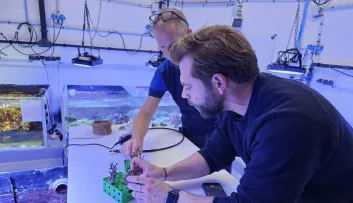
Coral resilience
Blue Innovation 3mn
Combining art, science and industry to restore coral reefs.
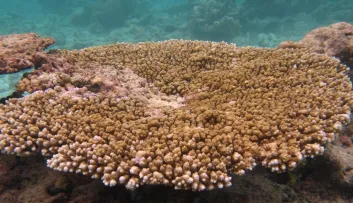
Selective breeding to restore coral reef...
Biodiversity 2mn
Genetic selection is the key to coral restoration.
The coral reef
Document to download (French version)