Coral Biodiversity 3mn
Nausicaá takes part in coral conservation with the World Coral Conservatory
Public aquariums, working together to preserve corals.

Climate change is having a direct impact on the health of coral reefs, which are suffering not only from rising water temperatures but also from ocean acidification.
The Centre Scientifique de Monaco (CSM) and the Institut Océanographique de Monaco are behind the Conservatoire Mondial du Corail, an initiative that brings together public aquariums, including Nausicaá, to create a unique collection of reef-building coral strains.
A genetic reservoir for coral
These aquariums host corals in their aquariological reserves and exhibitions, and practise cuttings in order to create a genetic reservoir of coral species that are threatened in the natural environment.
The first samples were taken from Aldabra, an atoll in the Seychelles, in the Indian Ocean. The samples, once identified and marked, were then sent to the network of partner aquariums.
Nausicaá's expertise in coral cuttings and rearing has been developed over more than 30 years.
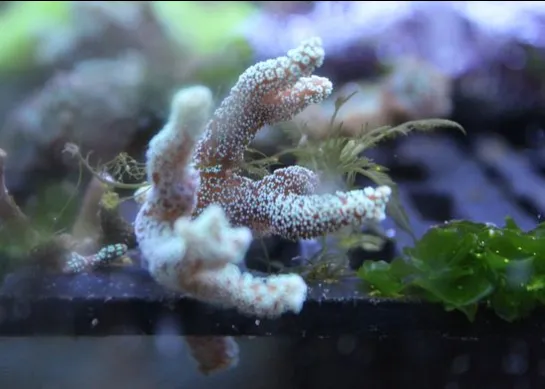
Aquariums: laboratories and conservatories of life
The corals have gone to the aquarium reserves to grow and be cut. The partner aquariums exchange cuttings in order to increase the chances of survival of these corals.
Thus preserved and multiplied within the aquariums, these corals can be reintroduced into the natural environment, if necessary and under scientific control, and if the environmental conditions allow their survival.
Eventually, the conservatory could be home to up to 1,000 species, or around two-thirds of the world's coral species.
In addition to this mission to preserve life, the Conservatoire will be carrying out studies into the evolution of coral reefs to help them cope better with climate change, drawing on the network of scientists specialising in coral reefs.
The Conservatoire will thus become a laboratory for selecting stress-resistant genotypes. The IPCC, the Intergovernmental Panel on Climate Change, states in its 2019 Special Report on the Ocean and Cryosphere that "remaining corals are expected to differ in composition and diversity from current reefs" (p.23 of the summary for decision-makers).
The IPCC experts also indicated that 70% to 90% of coral could disappear if atmospheric temperatures rose by 1.5 degrees. This percentage would rise to over 99% if global temperatures rose by 2°C.
Source : https://journals.plos.org/plosbiology/article?id=10.1371/journal.pbio.3000823
https://www.ipcc.ch/site/assets/uploads/sites/3/2020/07/SROCC_SPM_fr.pdf
Conservation actions at Nausicaá
Nausicaá has published its 2024 activity report on conservation and research. It lists species conservation actions and programmes, and research projects monitored and supported by the centre's teams.
Other articles
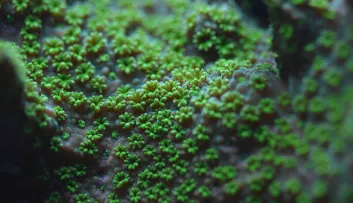
How does coral reproduce?
Coral 3mn
How does a coral polyp become a reef?
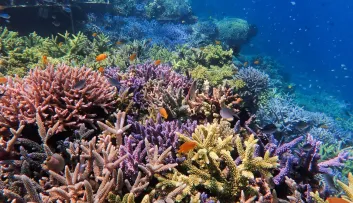
What is a coral reef?
Coral 9mn
Discover the coral ecosystem, an extraordinary garden under ...
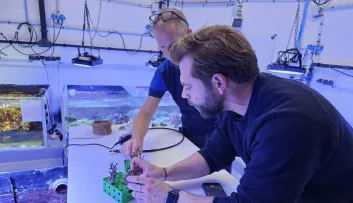
Coral resilience
Blue Innovation 3mn
Combining art, science and industry to restore coral reefs.

What is coral?
Coral 1mn
Animal or vegetal? Nausicaá and Esprit sorcier explain what ...
Selective breeding to restore coral reef...
Biodiversity 2mn
Genetic selection is the key to coral restoration.