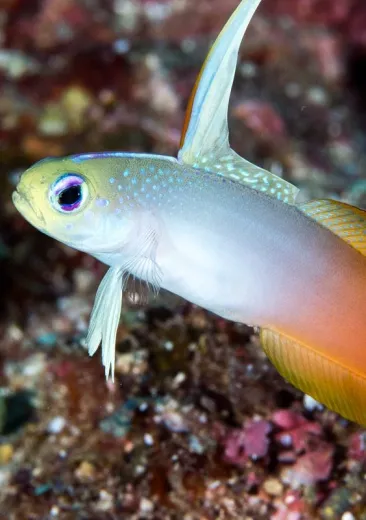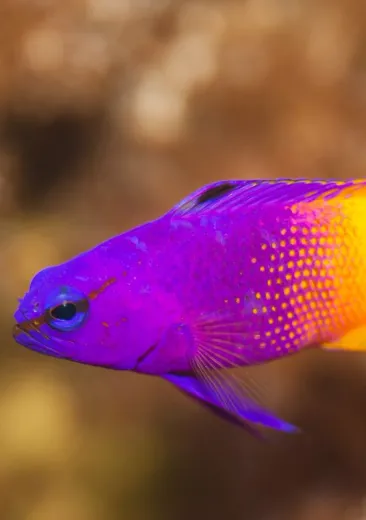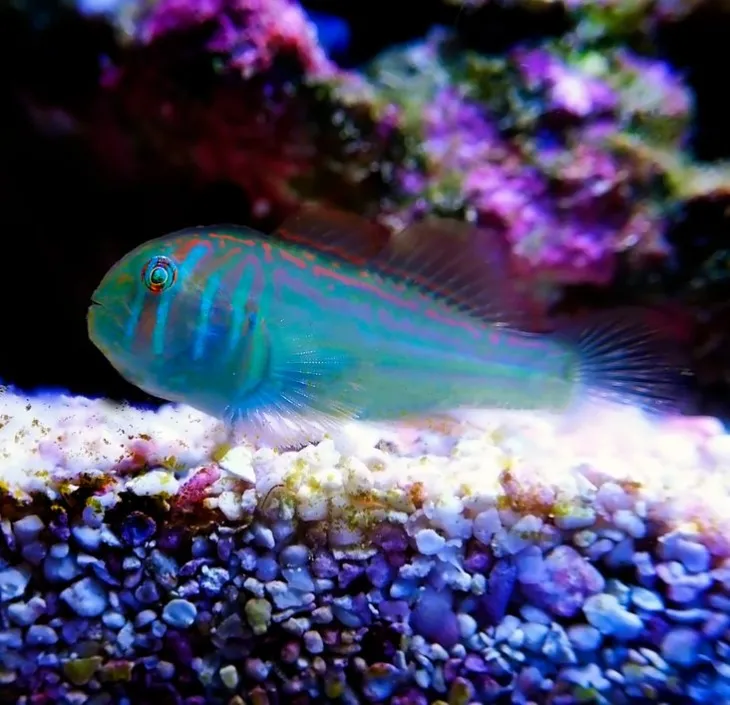
Broad-barred goby

  Tropical reef fish

Identity card

Broad-barred goby

Scientific name:
Gobiodon histrio
Family:
Gobiidae
Class:
Actinopterygii
Phylum:
Chordata
Year of description:
Valenciennes, 1837
IUCN Status:
Least Concern
Distribution:

Indo-West Pacific: From the Red Sea to Samoa, north to southern Japan, south to the Great Barrier Reef.

Habitat:

Among Acropora coral branches, up to 15 m deep.

Size:

3 to 3.5 cm max.

Diet:

Small invertebrates and zooplankton.


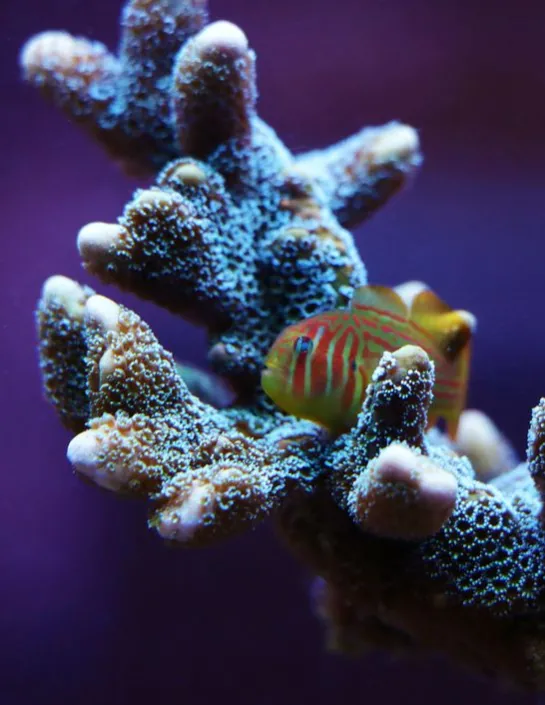
This species finds shelter, food and a breeding site among the branches of Acropora nasuta corals.

Guillaume, head of the tropical sector

This type of relationship is called commensalism, meaning that the relationship is beneficial to one party, in this case the goby, and neutral to the other, in this case the coral.
Did you know?

Where can I find the animal?

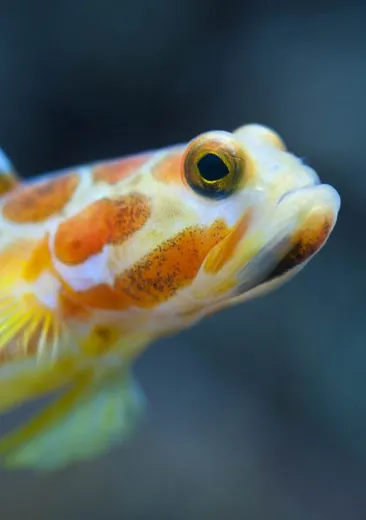
A solitary species or found in pairs, the green goby lives among the branches of Acropora corals. It is found in reef ridges and lagoons up to 15 m deep.

How can you recognise it?

This goby has a green body with vertical stripes or spots ranging in colour from red to purple.

What makes it special?

The green goby has the unique ability to change sex in either direction depending on its environment, and can do so several times during its lifetime. This fish can change sex when its partner dies in order to find another with which to reproduce.

It can secrete toxins through its skin to repel persistent predators.

Threats and protective measures

There are no specific conservation measures for this species.

Where can I find it at Nausicaá?

Mankind and shores

The Ocean Mag

Browse through our Ocean Mag

In the spotlight

À la découverte des animaux marins avec la Voix du Nord

Pour son podcast Les ch'tites histoires, la Voix du Nord a rencontré l'équipage de Nausicaá.

Article

10 things you need to know about coral

Coral, the planet's largest builder, is a fragile and threatened animal.

Article

Why don't young fish look like adults?

In some tropical fish, the changes between birth and adulthood are so great that it is difficult to identify the young.