Where can I find the animal?
The pipefish is found in the western Indian Ocean: Sodwana Bay, South Africa, and Inhaca Island, Mozambique. More recently recorded in the Maldives.
It is usually found in tide pools, lagoons, and the outer slopes of reefs.
How can you recognise it?
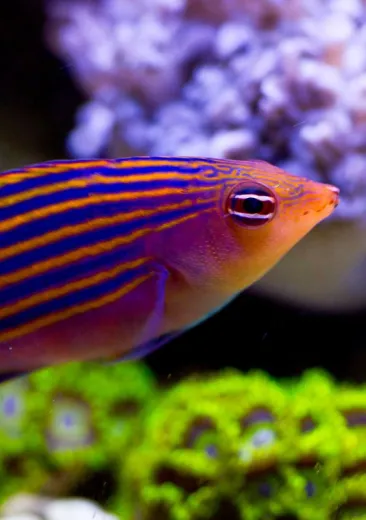
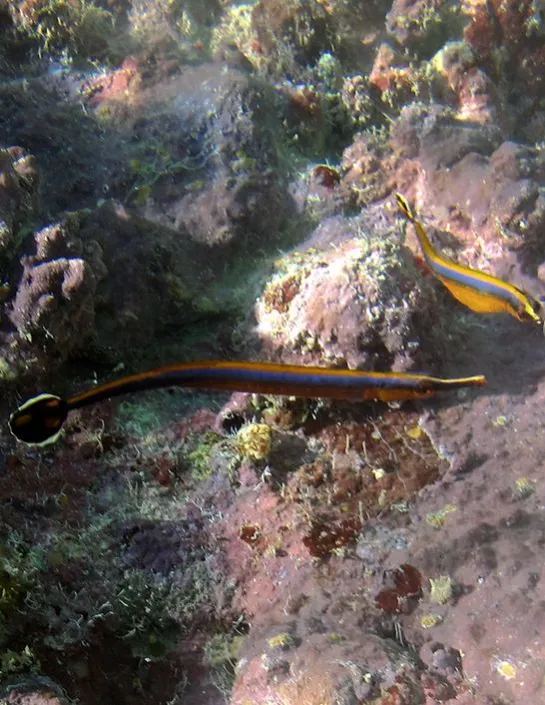
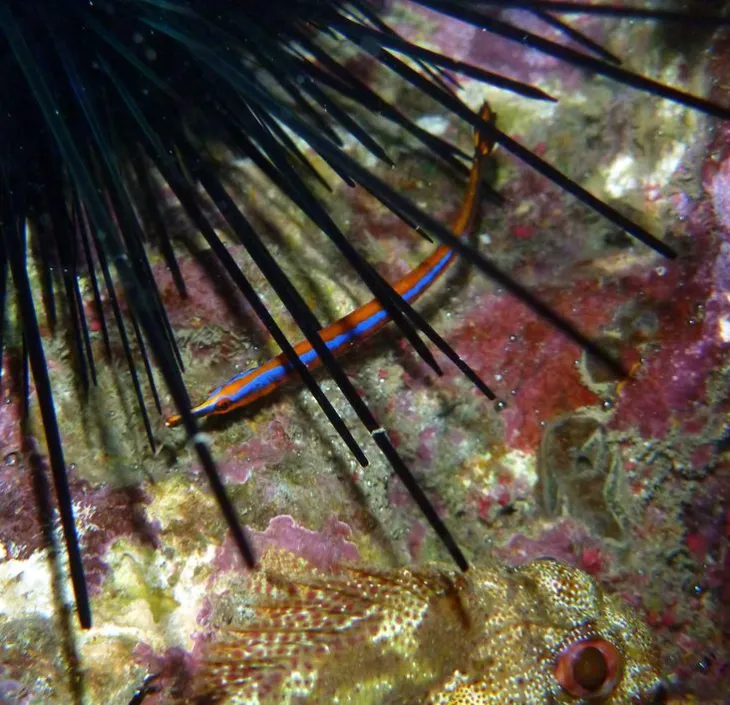
The striped pipefish has an elongated, tube-shaped body that ends in an elongated black and yellow snout on top. The male has two bony expansions under the snout, which is why it is called the double-chinned pipefish.
The body is orange with a long blue line edged with black running horizontally across it.
Pipefish are closely related to seahorses.
What makes it special?
Pipefish are ovoviviparous, and the male carries the eggs in an incubator pouch located under its tail, like seahorses.
It also feeds on copepods that parasitise other fish, acting as a cleaner.
Threats and protective measures
Very little information is available on the ecology, threats or conservation of this species. No species-specific conservation measures are known.