The shark is often accompanied by pilot fish or remora, which eat its remains and rid it of parasites. The shark provides protection for these fish.
Where is the animal to be found?
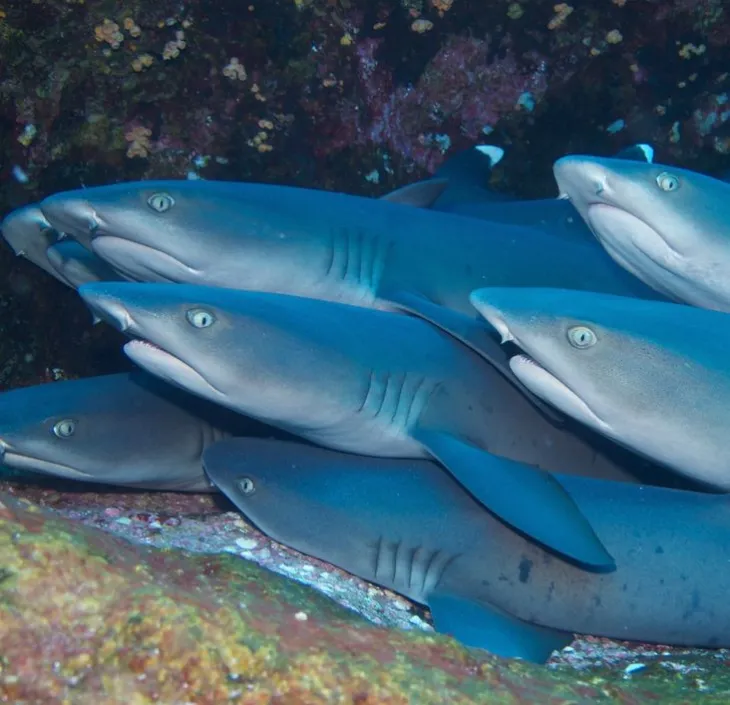
Widely found in tropical and subtropical waters of the Indo-Pacific Ocean, the whitetip coral shark is a demersal reef shark, i.e. it lives on continental shelves, close to the bottom, around islands and coral reefs.
Often living alone or in small groups, it is a fairly sedentary shark that does not stray far from its territory, often a cave or fault.
How can it be recognised?
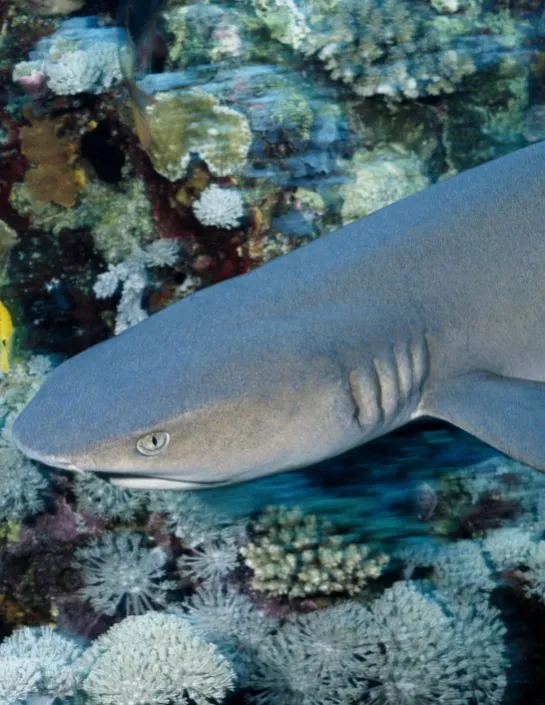
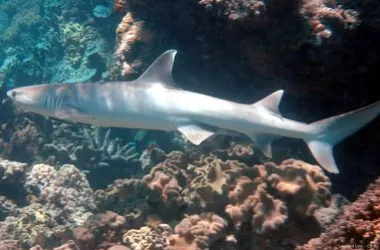
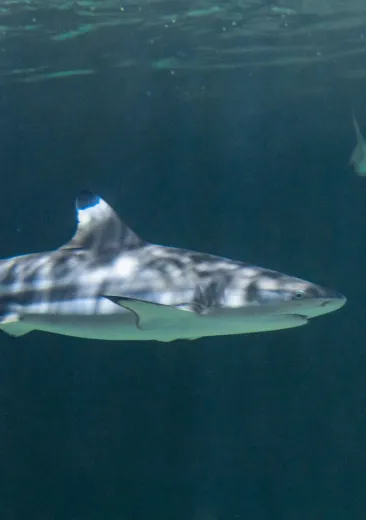
- One of the smallest species of reef shark, the whitetip coral shark can be recognised by its slender body and broad, flat head. As an adult, it can measure up to 1.60 m.
- Its distinguishing feature is the white markings on the tips of its dorsal and caudal fins, making it easy to spot.
- Grey-brown on the back, lighter on the belly.
- It also spends a large part of its time resting on the seabed and hunts at night. Its small size and flexible body enable it to slip into the crevices of the reef to catch its prey, which include small bony fish, cephalopods and crustaceans.
Quelle est sa particularité ?
Sexual maturity is reached at the age of 8 or 9, when the shark measures around 105 cm. This shark grows slowly.
Reproduction is viviparous, meaning that the sharks grow inside the female's body. Pups measure between 52 and 60 cm at birth. Litters consist of 1 to 5 young.
Menace et mesure de protection
The whitetip coral shark has been listed in Appendix II of CITES since 2022, along with the other species of the Carcharhinidae family.
Habitat degradation due to climate change, destructive fishing practices and declining water quality are all having an impact on the survival of this species, which the IUCN has classified as VU - Vulnerable.