Biodiversity Mangrove 6mn
What are the superpowers of mangrove animals?
How do mangrove animals manage to live in such a unique environment?

Living in mangroves - forests with their feet in the water - requires an incredible ability to adapt.
Subjected to tides, this tropical ecosystem sees its salinity, water level and oxygen levels vary constantly. The soil is unstable, salt-laden and oxygen-poor. In this extreme environment, only animals with real biological 'superpowers' manage to thrive and survive.
The fiddler crab
Superpower: oversized claw and 360° vision
The fiddler crab Uca pugilator is a small crustacean with a shell measuring just 2 to 4 cm, but it has an impressive claw that can measure up to 10 cm. Whether placed on the right or left side, this oversized claw is its main asset: a real "female trap".
Proud of his appendage, the male crab parades and waves his claw, both to attract the female and to impress his rivals. Males will even fight to win the female's favour.
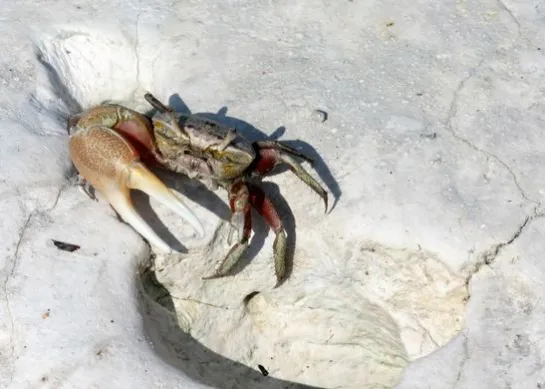
And size matters! The larger and more vigorous the claw, the more likely the male is to seal the deal. The way the burrow is kept also counts, and the female visits the site before mating with the male. Once the relationship is consummated, the male leaves for other adventures and the female remains in the burrow while her eggs develop.
The fiddler crab has another superpower: 360° vision. Its eyes, which are located at the end of movable peduncles, enable it to scan a wide perimeter without moving. Able to process light and its polarisation, this exceptional vision enables it to see on land and underwater. This ability has been studied by American and Korean researchers and has inspired an amphibious artificial vision system.
Not bad for a tiny crab!
The mudskipper
Superpower: breathe out of water and 360° view
Periophthalmus barbarus is a small fish with a rather unusual behaviour. Also known as a frog goby or mudskipper, it can walk on its pectoral fins and even hop across the mud. It also climbs trees and holds on with a suction cup, an ideal position for capturing its prey.
It is used to covering itself in mud to maintain its body temperature and digs burrows to protect itself from the sun. Very territorial, the periophthalmus defends its burrow and, during courtship, does not hesitate to impress by showing off its pretty fins.
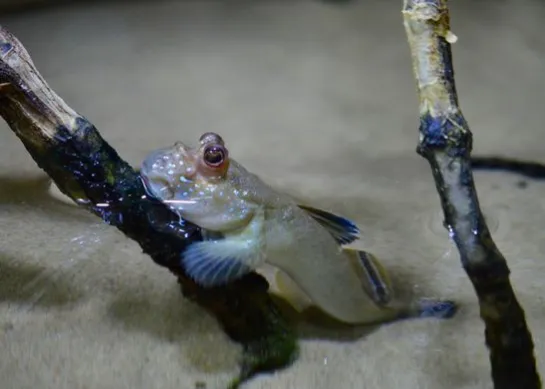
Underwater, it breathes with its gills, like all fish. Out of the water, it obtains oxygen by blinking its eyes and stirring the water in its gills, but it can also breathe through its skin, like amphibians.
But this is not the only superpower of this little fish. The eyes of the periophthalmus have a dual structure that allows it to see both underwater and above the surface. And thanks to their curved shape, and their ability to orientate themselves independently at any angle, this fish has a wide field of vision.
The archerfish
Superpower: Sniper
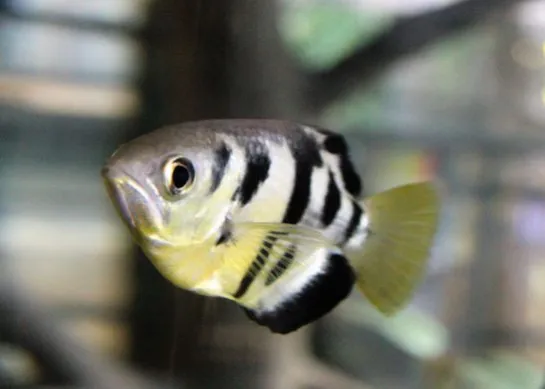
The Toxotes jaculatrix archer fish is a small mangrove fish with formidable marksmanship skills. Its weapon is a powerful jet of water that it throws up to two metres to hit its prey. It can target an insect in flight or resting on a leaf. Every time, he hits the bull's-eye!
Its large eyes are positioned to give it binocular vision, a major advantage for targeting and reaching its prey. It also calculates visual refraction to direct its shots and hit its target.
Younger arching fish are less precise in their shots, but with time and practice they acquire the precision technique needed to claim the title of elite marksman.
The snapping shrimp
Superpower: it shoots faster than its shadow
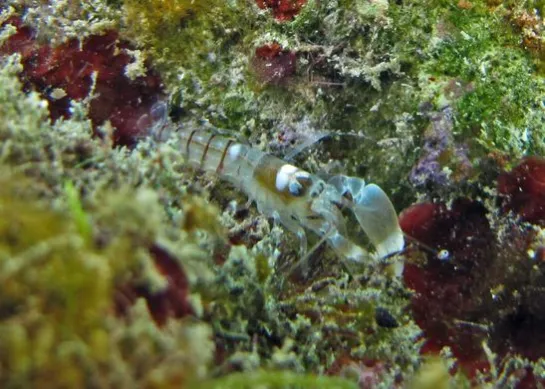
If there is one intriguing animal that can be found in the mangroves, it is the snapping shrimp. Like a Lucky Luke of tropical waters, the snapping shrimp draws faster than its shadow and stuns its opponents with the power of its claw.
So what is its secret weapon? An oversized claw that snaps shut and produces a jet of water shooting out at a speed of 100 km/h. The jet causes a cavitation bubble to implode, producing a shock wave capable of stunning prey such as small fish or crabs. This water vapour bubble briefly reaches a temperature of 4,000°C, a power of 250 dB and generates a flash of light – invisible to the naked eye. And all this in record time.
The snapping shrimp also has the distinctive feature of living in symbiosis with the goby. It has much better eyesight and therefore keeps watch while the shrimp digs its burrow. In return, the shrimp protects it with its lethal weapon.
Why not talk about mangroves?
Superpower: living with its feet in salt water
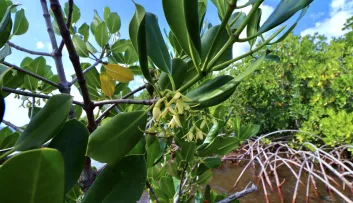
The mangrove, the emblematic plant of the mangrove swamp, has developed astonishing strategies to survive in this extreme environment.
It is able to filter the salt contained in seawater through its roots, or to evacuate it through its leaves.
But what makes it so surprising are its aerial roots. Shaped like stilts or pneumatophores - vertical roots that emerge from the water - the roots enable it to breathe in this waterlogged, oxygen-poor soil.
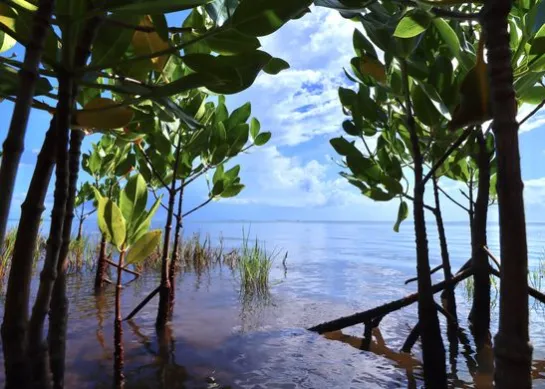
And that's not the only quality of these roots. They act as an effective natural barrier against coastal erosion, slowing the impact of waves and retaining sediment, stabilising the coastline and providing protection and food for the many marine species that are born and bred there.
A final special feature is the way in which mangroves propagate: they produce propagules, which are young plants. Once formed, these fall and take root in the mud or float for up to a year at sea, travelling long distances before finding a suitable place to germinate.
Other species have also developed special qualities to withstand the extreme conditions of this tropical ecosystem. Mangrove snakes have a high tolerance of salt and climb trees to hunt; birds such as kingfishers are precision hunters, able to spot prey in the murky mangrove water; and the mangrove monitor hunts on land as well as in the water.
Other articles
What is a coral reef?
Coral 9mn
Discover the coral ecosystem, an extraordinary garden under ...
10 things you need to know about coral
Coral 8mn
Coral, the planet's largest builder, is a fragile and threat...
How does coral reproduce?
Coral 3mn
How does a coral polyp become a reef?
10 things you need to know about mangrov...
Mangrove 7mn
The mangrove, a forest with its feet in the water, is an ess...