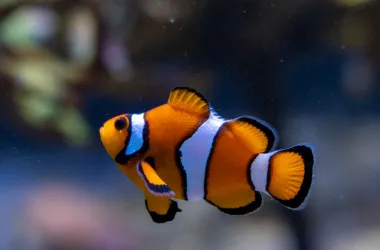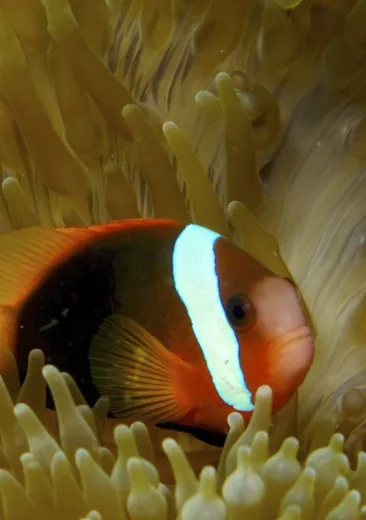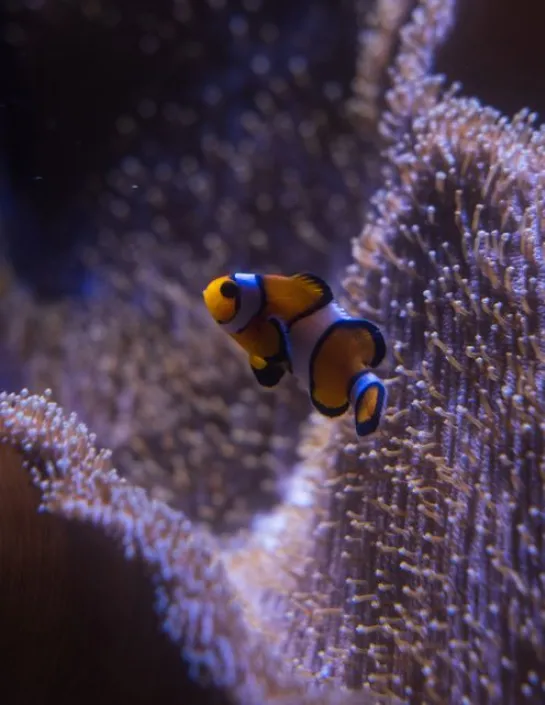
The clown anemonefish or ocellaris clownfish lives in symbiosis with a giant stinging sea anemone. It protects it from predators and in return, the fish keeps the anemone in good health. Each anemone usually hosts a female, her male partner and several small juvenile fish.
It is not considered as a potential prey because they share the same chemical compounds. The mucus that covers the clownfish is produced by its anemone and protects it from the stinging capsules of Cnidarians.
Where is the animal to be found?
The ocellaris clownfish lives near coral reefs together with a stinging anemone. The ocellaris clownfish spends its entire life in its chosen anemone.
It lives between a depth of 1 and 15 metres in lagoons, in reef habitats as well as in turbid coastal areas.
How can it be recognised?
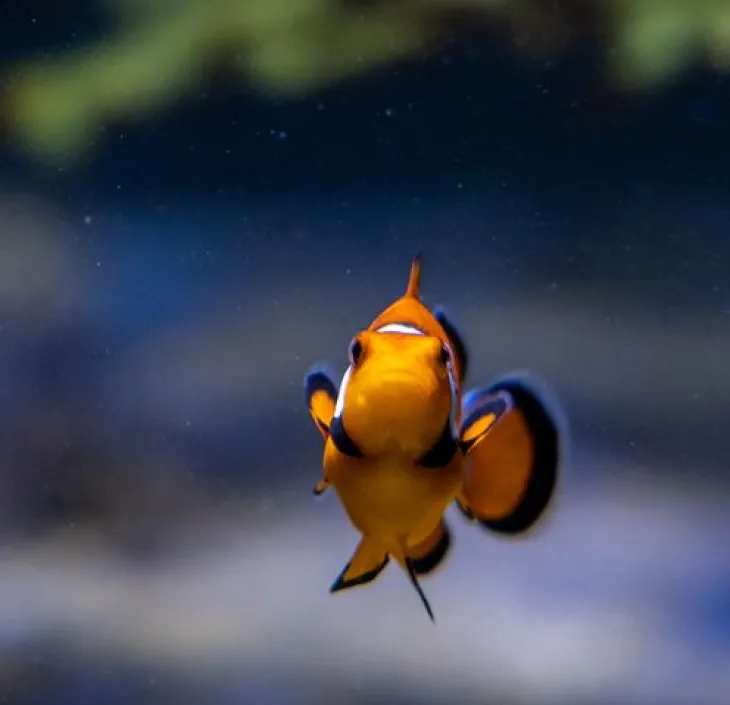
It can be recognised by its 3 white stripes. The ocellaris clownfish measures approximately 11 cm.
What is distinctive about it?
The ocellaris clownfish changes sex during its lifetime: it is born male and then, if the female dies, the dominant male will change sex and become female. The largest immature male will in turn become a dominant male. This species is oviparous, the female lays her eggs near the sea floor or in the anemone. The males look after them and aerate them.