Splitfin Flashlightfish

Splitfin Flashlightfish

  Tropical reef fish

Identity card

Splitfin Flashlightfish

Scientific name:
Anomalops katoptron
Family:
Anomalopidae
Class:
Actinopterygii
Phylum:
Chordata
Year of description:
Bleeker, 1856
IUCN Status:
Least Concern
Distribution:

Pacific Ocean: Malaysia, Philippines and Indonesia around Tuamotu Archipelago, north towards Southern Japan, and south

Habitat:

It lives in coral reefs to depths of 400 metres. It shelters in undersea caverns, caves and crevices during the day.

Size:

It measures 28 cm on average but can grow up to 35 cm long.

Diet:

Its diet mainly comprises zooplankton and small crustaceans.

Did you know?

This luminous Pacific fish is a fascinating animal.

Its diet comprises zooplankton and small crustaceans.

It shelters in undersea caverns, caves and crevices during the day.

Juveniles can be seen on very dark nights near caves and slopes. 
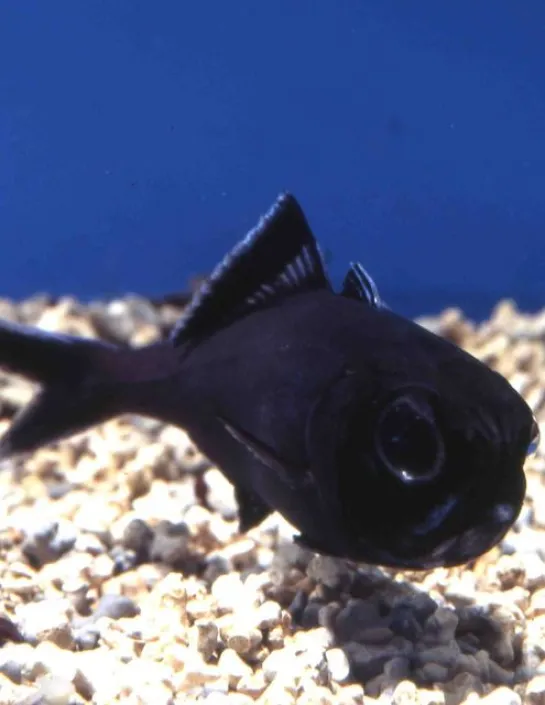
 

The splitfin flashlight fish is a nocturnal animal: it comes out at night to feed.

Where is the animal to be found?

It lives in coral reefs to depths of 400 metres. It shelters in undersea caverns, caves and crevices during the day. Juveniles can be seen on very dark nights near caves and slopes.

How can it be recognised?

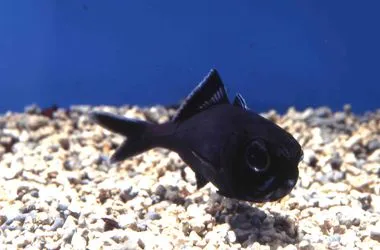
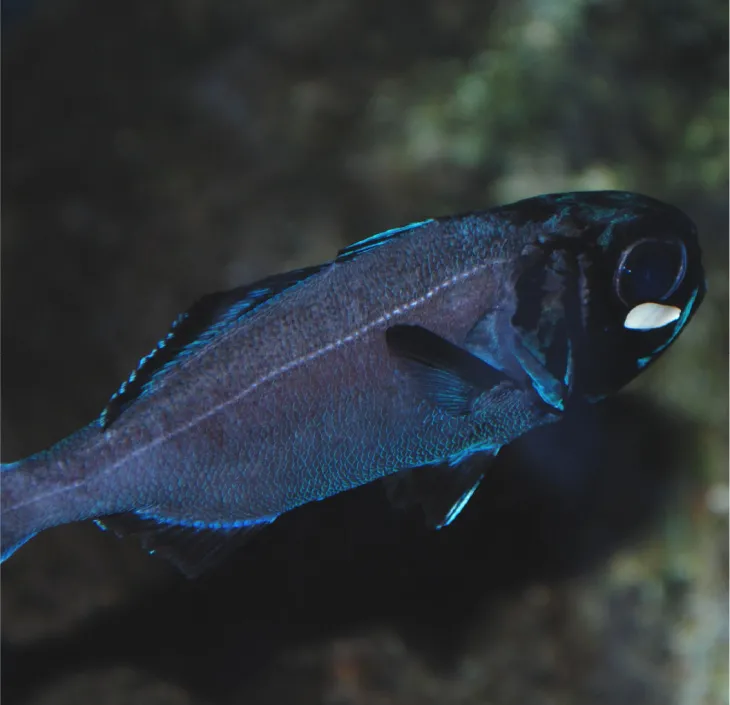
It has a bean-shaped luminous organ beneath its eye that gives off a bluish light. This is possible due to the presence of bioluminescent bacteria in these pouches.

This phosphorescent organ helps it to find food and avoid predators.

The light from this luminous organ can sometimes look like it’s blinking. This is probably used to communicate within a group.

It can also “turn off” this light by turning its organ inwards.

What is distinctive about it?

The splitfin flashlight fish is a nocturnal animal: it comes out at night to feed. Its diet mainly comprises zooplankton and small crustaceans.
The Ocean Mag

Browse through our Ocean Mag

In the spotlight

À la découverte des animaux marins avec la Voix du Nord

Pour son podcast Les ch'tites histoires, la Voix du Nord a rencontré l'équipage de Nausicaá.

Article

10 things you need to know about coral

Coral, the planet's largest builder, is a fragile and threatened animal.

Article

Why don't young fish look like adults?

In some tropical fish, the changes between birth and adulthood are so great that it is difficult to identify the young.