Biodiversity 4mn
Did you know? Behind the scenes of reproduction at Nausicaá in 2025
Fish, prawns, sharks, animals that reproduce or are bred at Nausicaá are added to the exhibition areas.

It all happens in the aquarium reserves. A team of carers busily tends to tanks in which microscopic fish larvae are growing. "See that? That's a seahorse," says Simon, head of the Breeding Department at Nausicaá. You have to concentrate and follow the keeper's instructions to locate the tiny moving dot, identify it as a baby seahorse, and imagine that one day our visitors will be able to see it.
Fish born in our reserves join the display tanks
It is not the only marine species that is born and raised in the reserves. Others have joined the exhibition areas this year. Sea Goldies Pseudanthias squamipinnis have brought colour to the lagoon, while horse mackerel Trachurus trachurus and palometa Trachinotus goodei have swelled the ranks of fish in the large open sea basin. They will soon be joined by royal trevally Gnathanodon speciosus.
Lysmata boggessi cleaner shrimp have taken up their duties in several aquariums in the Coral Action area and in the Island Stories exhibition. They are allies of Nausicaá's biologists because they are detritivores and also feed on invasive glass anemones of the genus Aipitasia, which can damage corals.
The Tropical getaway exhibition has been enriched with new additions, born and raised at Nausicaá: a few Common Bluestripe Snapper (Lutjanus kasmira) and small Diana's wrasse (Bodianus diana). In December, the large tank will see the transfer of King Angelfish (Holocanthus passer).
This reproduction and breeding work begins with the daily collection of eggs from various ponds at the centre. Patience and precision are then required to ensure that, after incubation and hatching, the larvae grow and populate our ponds.
Corals and jellyfish
Corals
The tropical sector's caretakers worked in the reserves to propagate coral cuttings to populate the various tanks in the Tropical getaway exhibition. Between 200 and 250 corals were installed in the aquariums.
Jellyfish
Another task requiring patience and precision takes place in the reserves dedicated to jellyfish breeding. Coralie, the keeper in charge of these fascinating animals, carefully monitors the development of her "polyp boxes". In each of these boxes, polyps produce ephyra, which are young jellyfish produced by strobilation.
In 2025, Coralie monitored the reproduction of 17 species of jellyfish and achieved more than 25,000 births. Approximately 7,000 individuals were selected for our exhibitions.
Have you seen them? Baby horned sleeper sharks
Two young Horn Sharks born at Nausicaá – a first for the aquarium in 2024 – have joined the Mankind and shores exhibition, near the Californian pool where their parents live. These young sharks can reach a size of 1.20 m in adulthood.
Nausicaá also participates in the EEP – EAZA Ex-situ programme dedicated to this shark.
Other sharks born at Nausicaá can be seen in the exhibition areas: a female Epaulette Shark hides in the reef bed of the Tropical getaway exhibition, and you need to be patient to spot her as she likes to hide in the crevices of the rocks. Another will certainly be easier to observe in the Island Stories exhibition.
The plant world also reproduces
Symbolic figures of the mangrove, mangrove trees grow in the Tropical Escape exhibition, and one of them has already released a propagule. This pod buries itself in the mud to become a new mangrove tree.
Jellyfish, fish, sharks and plants: life abounds at Nausicaá!
Other articles
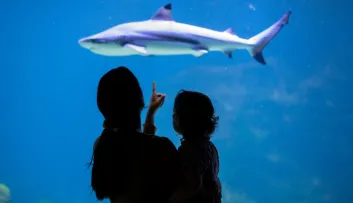
Black tip sharks join the Tropical getaw...
Biodiversity 3mn
New sharks to discover in the new tropical environment.
Discover the incredible medical training...
Biodiversity 5mn
How does medical training contribute to animal welfare?

Looking after jellyfish at Nausicaá
Nausicaá's professions 2mn
Since it opened in 1991, Nausicaá has become an expert in je...