Where is the animal to be found?
Found in the Western Pacific, it can be found in the Western Philippines, Indonesia, New Guinea, the Great Barrier Reef, Vanuatu, New Caledonia, the Caroline Islands, Marshall Islands, Nauru and Kiribati.
Sometimes territorial, the Foxface Rabbitfish lives among the corals of lagoons and coral reefs. It is often seen evolving among Acropora corals.
How can it be recognised?
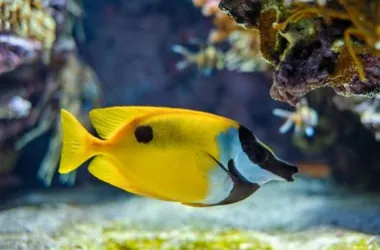
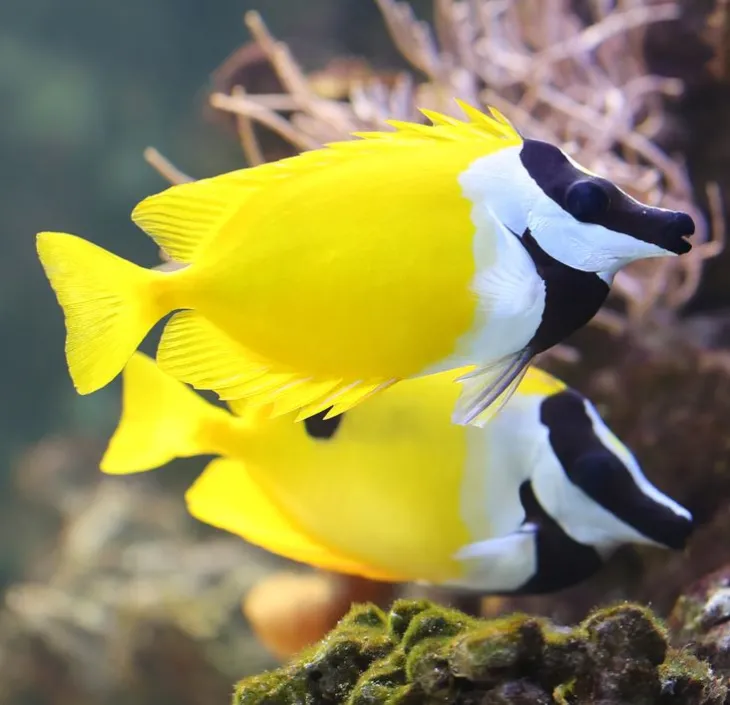
- The Foxface Rabbitfish, a member of the rabbitfish family, owes its name to its grazing behaviour and the characteristic shape of its mouth.
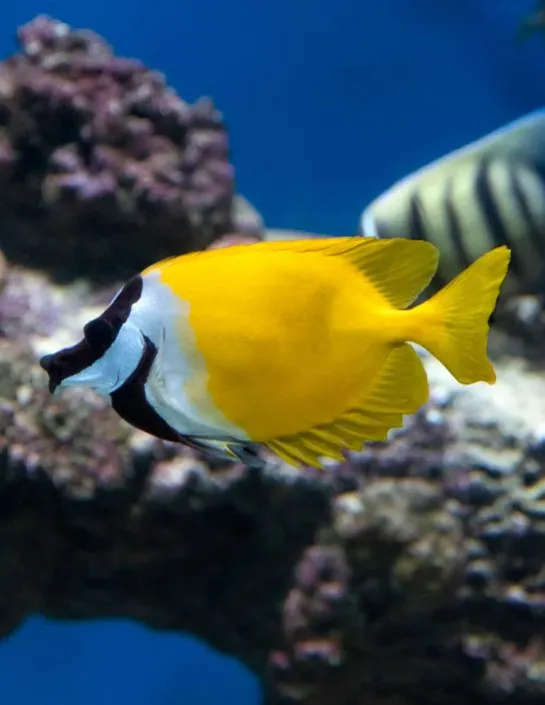
- The body is yellow and the head white, with a dark vertical stripe over each eye.
- This fish has strong, prickly and venomous spines.
What is distinctive about it?
The Foxface Rabbitfish lives mainly alone or in pairs. Juveniles and sub-adults live in large shoals among the corals, where they feed on the algae that covers them.
Threats and protective measures
There are no specific conservation measures for the species, but it is present in marine protected areas throughout its range.