Mangrove 2mn
Mangroves are finding it increasingly difficult to breathe
Swedish researchers have measured oxygen and carbon dioxide levels in twenty-three mangrove areas around the world.

Between land and sea
With its roots in the water, the mangrove thrives on the ebb and flow of the tides. At low tide, oxygen levels plummet whilst carbon dioxide levels rise, making it difficult for fish and other marine species to breathe.
Some species have adapted to these extreme conditions. As the tide rises, oxygen levels increase, allowing more sensitive species—including fish that are important for fishing—to come and feed or seek shelter amongst the roots.
Ecosystems that push the boundaries
Researchers at the University of Gothenburg have, for the first time, measured oxygen levels in twenty-three mangrove areas around the world.
Conditions there are already extreme: in tropical regions, such as India or the Amazon, oxygen levels remain low and carbon dioxide levels high for long periods, leaving very little time for sensitive species to enter the mangrove.
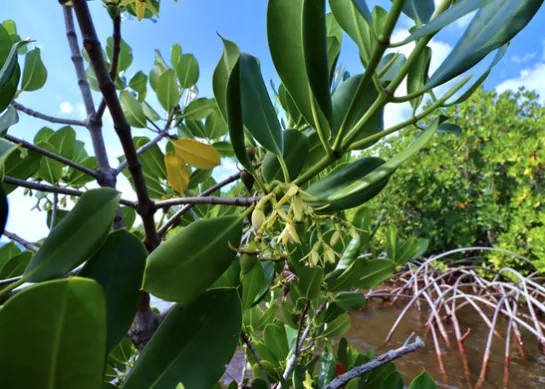
A rise in temperatures that could turn everything upside down
Global warming caused by human activities is accompanied by a rise in ocean temperatures. According to simulations carried out by scientists, stressful conditions (low oxygen, high CO₂ levels) in mangroves could become more severe and last longer, reducing the length of time that fish and other species can take refuge there.
In some cases, many fish may even struggle to breathe there. These diverse habitats could then be among the first to lose sensitive species, with impacts on fisheries and the livelihoods of local communities that depend on them.
Other articles
Comment l'étude de la mangrove peut-elle...
Océan et Climat 2mn
En perçant les secrets des plantes de la mangrove, les cherc...
What are the superpowers of mangrove ani...
Biodiversity 6mn
How do mangrove animals manage to live in such a unique envi...
All about... Mangroves
Mangrove 1mn
The mangrove is a tropical forest with its feet in salt wate...