Biodiversity 5mn
How are fish names created?
Knowing the scientific names of fish ensures that species are not confused. But how are they created?

If, during your visit to Nausicaá, you talk to a keeper about an animal, there is a good chance that they will give you its scientific name, which has Latin or Greek roots.
But how are the names of animal species determined?
Common names or vernacular names for fish are created informally and are determined by the animal's appearance, habitat or behaviour. For example, the mandarinfish owes its name to its multicoloured coat, the clownfish to its colours, the razorfish to its blade-shaped body, and the tub gurnard refers to the noises it makes.
To avoid confusion and deception at fishmongers' stalls, official lists of authorised names are published by the State and the European Union. And now, in France, the scientific names of species are displayed on labels.
For its part, Ifremer, the French research institute dedicated solely to knowledge about the ocean, draws up lists of the most commonly used names alongside the scientific names of the species.
How are scientific names for species formed?
While the common names of fish may vary from one region to another and from one language to another, the scientific name is unique and universal. These scientific names are referenced in the International Code of Zoological Nomenclature (ICZN) and apply to all animals.
The rules for creating and prioritising scientific names for animals are defined by the International Commission on Zoological Nomenclature.
What are the rules for creation?
We owe the foundations of binomial nomenclature to the Swedish naturalist Carl von Linné.
A name composed of two words
Each species has a name consisting of two words, in scientific Latin or Latinised, and always presented in italics.
The first word is always capitalised and indicates the genus of the animal. The epithet that follows specifies the species within the genus. The name of the person who first described the species and the date are added to this name.
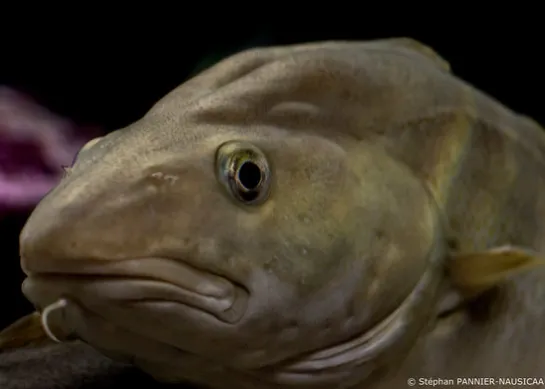
Cod
Let us take the example of cod. Gadus morhua (Linnaeus, 1758).
Gadus, Latin term of Greek origin used to describe fish resembling cod and morhua, term resembling the Old Norse name for cod !
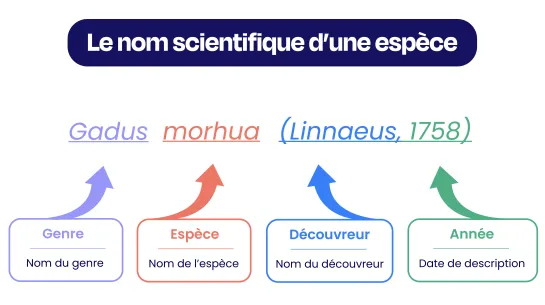
Choosing a name: a few rules to follow
The person who discovers a new species has the privilege of naming it. However, they must follow a few rules:
- The epithet must be descriptive: Naso brevirostris, brevirostris describing the "short rostrum" of this fish of the genus Nason.
- Or geographical: such as the Californian sea lion Zalophus californianus.
- Sometimes scientists pay tribute to famous people by creating an epithet based on their names. For example, an isopod discovered in East Africa, in Zanzibar, refers to Freddy Mercury, who was originally from the island. It is named Cirolana mercuryi.
Simply giving an animal a name is not enough to legitimise the existence of a new species. Several requirements must be met:
- The description of this new species must be published in a scientific journal and validated.
- A physical specimen called a holotype must be kept in a museum such as the National Museum of Natural History in Paris to serve as the absolute reference for the species.
- Finally, the name must comply with the code of the International Commission on Zoological Nomenclature (ICZN).
The first valid name published is the only true name. If the same fish is discovered in two different places and has two different names, the name published first becomes the official name and the only one used.
Name changes
Advances in genetic knowledge regularly lead scientists to review the classification of species and, consequently, to change their names. After sequencing, two species believed to be distinct may turn out to be one and the same, or, conversely, a single name may refer to several "sister" species that need to be separated.
Name mergers also occur when it is discovered that juveniles and adults of the same species – with radically different appearances – have been described as belonging to separate species.
In addition to these scientific developments, ethical and cultural considerations are now coming into play: the use of names inspired by pop culture figures is being questioned, as is the preservation of names honouring figures whose reputation has become embarrassing in light of current values.
What will tomorrow's nomenclature look like? One thing is certain: it will continue to evolve in line with scientific discoveries and the sensibilities of our time.
Other articles
How do fish sleep?
Biodiversity 3mn
No eyelids, no sleep? Fish need rest too.
Do all fish have scales?
Biodiversity 3mn
Scales or no scales? Do all fish have them?
Why don't fish sink?
Biodiversity 3mn
What is the secret that prevents fish from sinking to the bo...