Biodiversity 3mn
Why don't fish sink?
What is the secret that prevents fish from sinking to the bottom of the ocean?

Watching the incredibly lively spectacle of fish twirling, swimming in all directions, diving into the depths and rising to the surface, one might ask: how do fish manage not to sink?
They don't have armbands around their fins or buoys around their necks, so what is their secret?
The swim bladder, the secret weapon of bony fish
Fish have the distinctive feature of having a swim bladder. This organ, located in the abdominal cavity, is unique to bony fish. It functions like a balloon: when inflated, the fish is lighter and can rise to the surface more easily. Conversely, when this balloon is deflated, the fish's body is denser, allowing it to descend deeper into the ocean.
Fish can therefore move effortlessly to different depths in the water column, depending on their needs.
How do other fish do it?
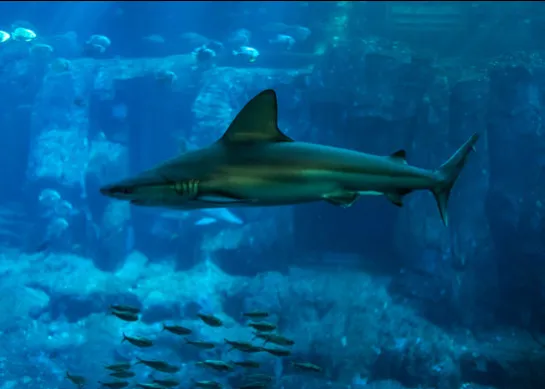
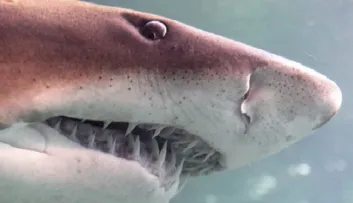
Sharks, for example, like other cartilaginous fish, do not have a swim bladder but a liver rich in oil, squalene, which ensures their buoyancy. This large liver can account for up to 25% of their body mass. The sand tiger shark has the peculiarity of swallowing air into its stomach – aerophagia – to adjust its buoyancy.
In addition, great white sharks and other open-water sharks swim continuously to stay afloat and breathe.
What about the fish that live on the seabed?
Nurse sharks spend most of their time resting on the seabed. Their naturally dense bodies allow them to remain at the bottom without effort. Unlike other sharks that must swim to breathe, the rhythmic opening of their gill slits is sufficient to create a current in their mouth cavity, all without moving.
Rays, which are also adapted to benthic life, have a flattened morphology and body density that allows them to remain anchored to the bottom. To breathe without sucking in sand, they use spiracles located on the top of their heads, through which water is sucked in before passing over the gills.
Finally, flatfish such as sole and turbot, which has a swim bladder, have an asymmetrical, flattened morphology that is perfectly adapted to life on the seabed. Their dense bodies even allow them to burrow slightly into the sand to camouflage themselves.
The swim bladder, an organ worth its weight in gold
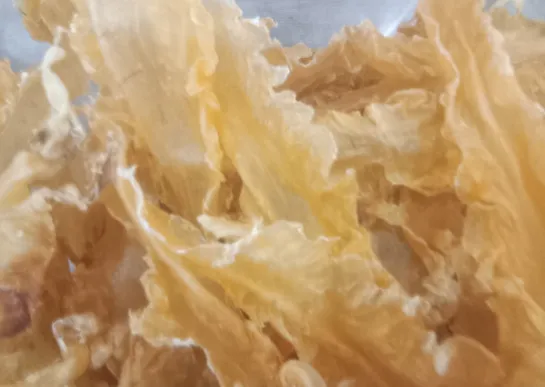
This organ, located under the spine of fish, is highly sought after by traffickers. They sell this precious commodity at exorbitant prices to Chinese customers, who believe it has aphrodisiac properties and consider it a delicacy.
This trade generates huge sums of money but causes damage to marine biodiversity in the "supply areas". The red acoupa in French Guiana and the vaquita, an accidental catch of this trade in Mexico, are victims of this illegal fishing.
Other articles
How do fish breathe underwater?
Biodiversity 2mn
That's why fish don't blow bubbles!
Which fish is the largest in the world?
Biodiversity 4mn
At up to 18 metres in length, the whale shark is the largest...
How many teeth do sharks have?
Biodiversity 4mn
A shark would be a dentist's worst enemy !