Biodiversity 4mn
The sharks of Nausicaá: have you seen them all?
Do you know how many species of sharks there are to discover at Nausicaá? Let's learn more about these fascinating animals!

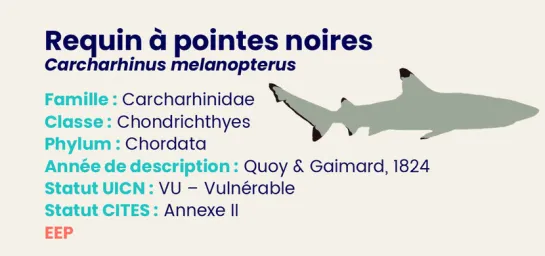
The opening of the Tropical getaway exhibition marked the arrival of new residents: blacktip reef sharks and a whitetip reef shark.
But these are not the only sharks swimming in the different areas of Nausicaá.
Discover their profiles and get to know them better!
Blacktip reef shark
The newbies
Arriving in 2025, these sharks come from the Paris Aquarium and the Liège Aquarium. Small reef sharks, they are lively and easily recognisable thanks to the black colour that borders their fins.
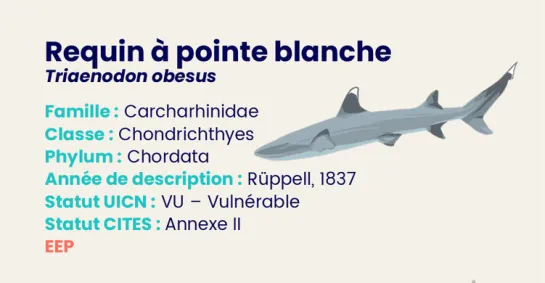
Whitetip Reef Shark
In the lagoon pass
This reef shark is much calmer than its blacktip cousin. Sedentary, it prefers to stay close to the bottom. Settled in the lagoon pass since 2025, it is discreet: keep your eyes peeled to spot it!
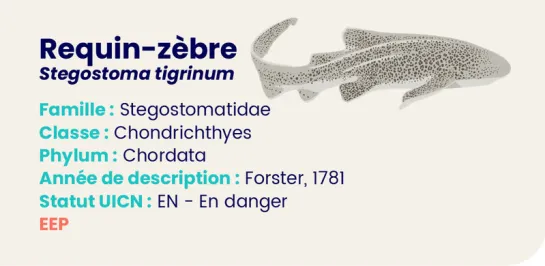
Zebra shark
In the lagoon
Peaceful and often resting on the seabed, this shark is born with stripes that turn into spots as it grows. At Nausicaá, reproduction is regular: divers often collect eggs, keratin sacs in which the embryos develop.
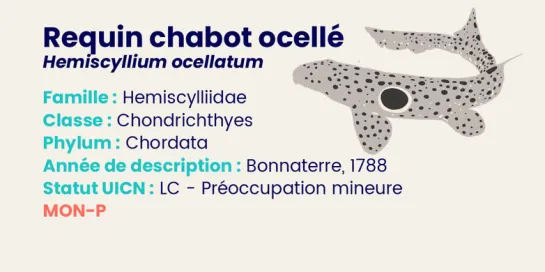
Epaulette shark
Walking sharks in Tropical getaway
These "walking sharks" arrived in 2016 and have reproduced several times. Two individuals have recently joined the reef in the Tropical Escape exhibition, including a female born at Nausicaá. Discreet, they like to hide in the crevices of the rocks: keep your eyes peeled!
Horn shark
The sleeper of the Californian basin
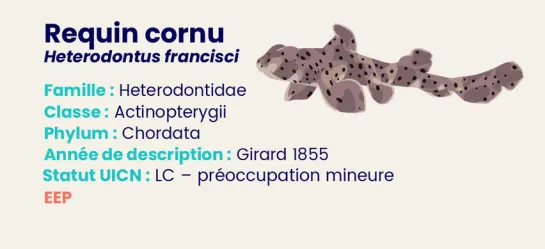
As its name suggests, this shark is not very active and is mainly nocturnal. It lives on the seabed, in the kelp forest of the Californian basin. The young horn sharks born at Nausicaá joined the exhibition a few weeks ago. A special feature of these sharks' eggs is that the keratin shell is shaped like a screw, allowing it to attach itself between rocks.
Sandbar Shark
Sharks in the High sea tank
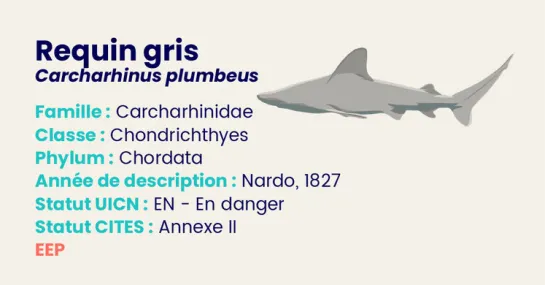
These sharks live in tropical and temperate waters and are constantly on the move. At Nausicaá, they swim in the large open sea tank alongside manta ray, guitarfish, giant stingrays and other species.
Leopard Shark
In the Californian tank
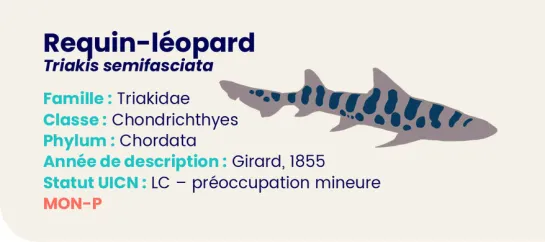
Inhabiting kelp forests in cold temperate waters, it shares the Californian tank in the exhibition Mankind and shores. The first births took place at Nausicaá in 2021.
Starry Smoothhound
In the Californian tank
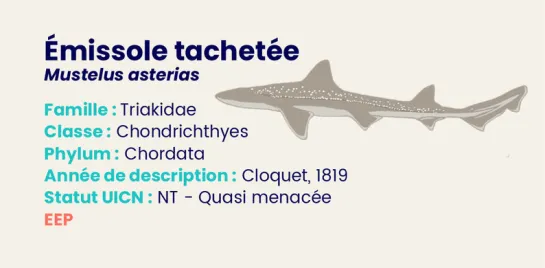
This grey shark with light spots lives on sandy or gravel bottoms. At Nausicaá, it occupies the bottom of the Californian basin. First successful reproduction in 2021!
Short-tailed nurse shark
In the exhibition Stories of Islands
This small shark has the unique ability to survive for several hours out of water. It lives in reef areas where tides can be strong.
Thanks to its thick skin and ability to pump water, it can wait in an exposed reef until the next tide.
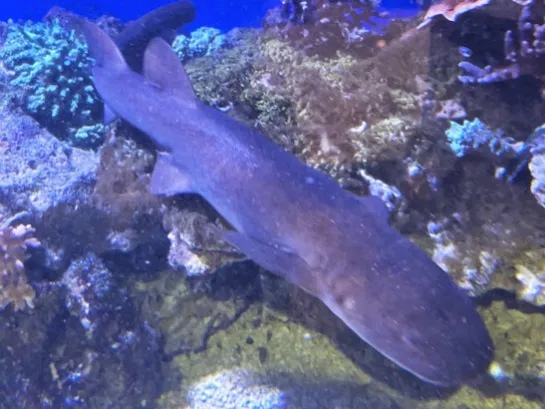
Smallspotted Catshark
In the Journeys in the North sea area
The Smallspotted Catshark is a small spotted shark that spends its days resting on sandbanks.
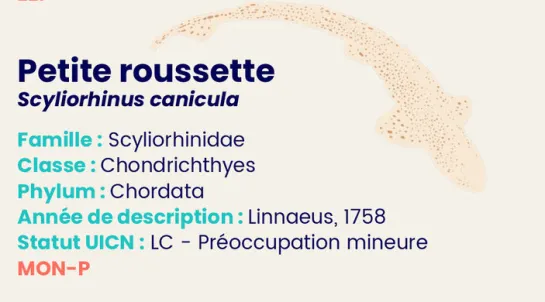
Large-spotted dogfish
In the Journeys in the North sea area
A long, slender shark that lives on the sea floor, the dogfish gets its name from the colourful spots covering its body. Dogfish eggs are keratin sacs in which the embryos grow.
Filaments at the four corners of the sac allow it to attach itself to a support during the four to nine months of incubation.
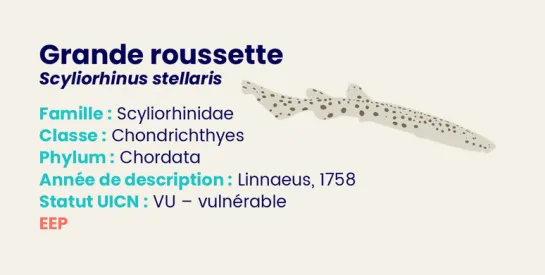
Conservation and Research Report
The illustrations are taken from the Conservation and Research report published in 2025 by Nausicaá.
The abbreviations EEP and Mon-P refer to the conservation programmes dedicated to these species in which Nausicaá participates.
Other articles
Black tip sharks join the Tropical getaw...
Biodiversity 3mn
New sharks to discover in the new tropical environment.
How many teeth do sharks have?
Biodiversity 4mn
A shark would be a dentist's worst enemy !
What do sharks eat?
Biodiversity 4mn
The image of a voracious shark constantly on the lookout for...
Comment le requin inspire-t-il de nouvel...
Biodiversité marine 1mn
Nausicaá et Esprit sorcier vous expliquent le biomimétisme à...