Nausicaá's professions 4mn
Seals, osteopathy and medical training
The health and well-being of sea lions depends on daily training to prepare them for medical care.
The sea lions’ daily routine is structured around rest, physical training and care. During the shows, the sea lions move around in front of the audience, performing exercises that mimic their natural behaviour.
But did you know? Behind the scenes, the trainers have developed expertise so that they can handle the sea lions on a daily basis.
Training in preparation for handling sea lions
The health of sea lions is one of the team’s primary concerns. Thus, regular check-ups are carried out with the veterinary surgeon specialising in marine mammals. For the past ten years, the team of Sea Lion handlers has been working with an osteopathic and homeopathic veterinary surgeon. Handling marine mammals is a challenging task. The veterinary surgeon, who is more familiar with pets and racehorses, came to learn how to handle sea lions.
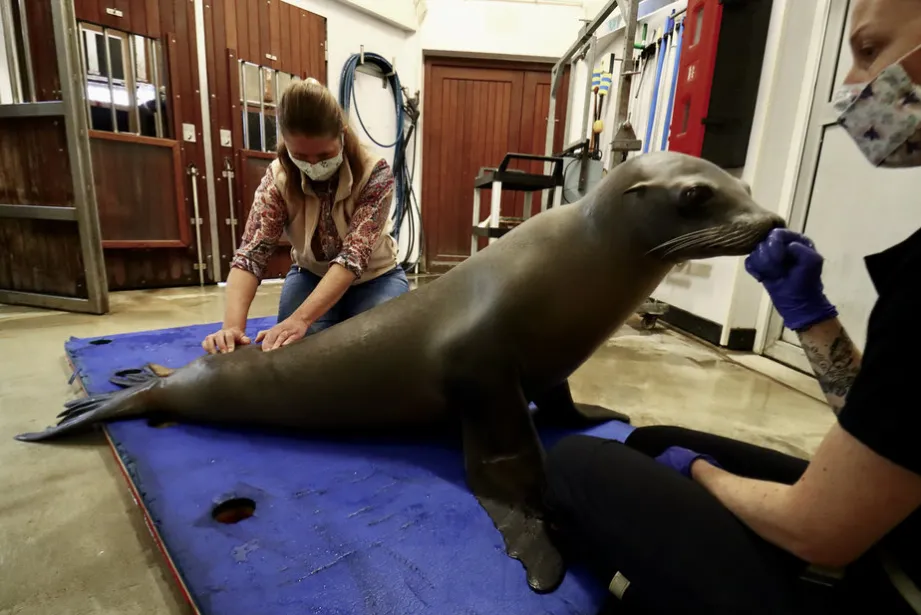
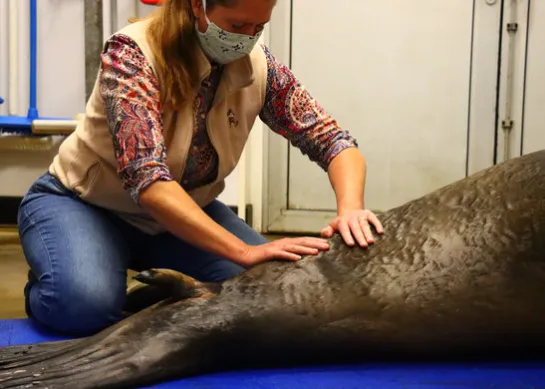
The daily training sessions given to the sea lions by their handlers make the osteopath’s work easier, as the sea lions are used to being handled; this means that she can work on the energies by placing her hands on the sea lion’s body, without manipulating the muscles, bones or other parts of the body. This alternative to conventional medicine offers benefits and efficacy comparable to those of drug treatments, but without the side effects.
Facilitating medical examinations
Medical training is primarily a means of gaining easy access to the animal. Daily sessions get the animal used to being handled and reduce stress, making medical examinations such as ultrasound scans, X-rays and blood tests easier.
Sea lions adapt easily to human contact and accept handling for medical purposes and by veterinary surgeons.
With daily training and monitoring, the handlers are constantly working on prevention to help detect any changes in the animals.
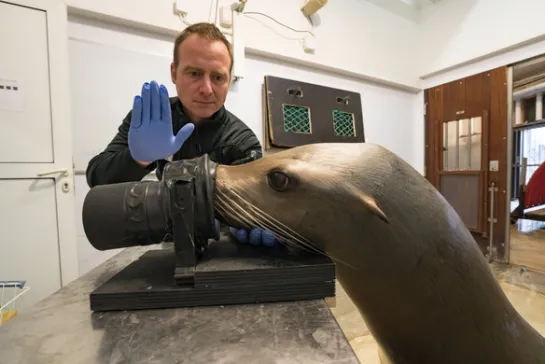
Since the first sea lions arrived in 1998, the team of handlers has developed internationally-recognised expertise that is the result of months of repeated exercise and training. The entire training programme is based on showing respect for the welfare of the animals.
Less stress and strain for the animals and, above all, no need to use any anaesthetic for routine examinations.
Sea lions and osteopathy
We are not the only ones to suffer from minor aches and pains, a stiff neck or a blocked back. At Nausicaá, seals also sometimes have health concerns that can be treated with osteopathy.
The health of the seals is regularly checked by a veterinary surgeon. In addition to conventional treatments, there are other medicines that are just as effective. They are becoming increasingly popular in zoos.
Chinese medicine is successfully used in Asia on a wide range of species, from large mammals to birds. Homeopathy is also used, optimising the body’s ability to heal itself, while limiting the need for antibiotics, corticosteroids and other treatments for serious pathologies.
A monthly consultation
From now on, every month, the osteopathic veterinary surgeon will call in. A few years ago, her work helped to improve the mobility of Speedy, our oldest sea lion, who was having great difficulty moving her hindquarters. Treatment sessions can last up to half an hour. These sea lions are used to daily medical training exercises, so they are happy to take part in these sessions designed to improve their health.
Physical exercises
Outdoors, the team of trainers encourages the sea lions with exercises that evoke their natural behaviour, such as escaping from predators, jumping onto rocks or getting into the water.
This gives the sea lions a chance to get some physical exercise!
In effect, medical training involves asking the animal to remain motionless. The energetic sessions are designed to develop physical fitness and the mental stimulation sessions are designed to combine movement and reflection.
Jobs at Nausicaá
Find out about the many professions that bring Nausicaá to life on a daily basis.
Autres articles
Découvrez l’incroyable entraînement médi...
Biodiversité marine 5mn
Comment l’entraînement médical participe-t-il au bien-être a...
Les soins au quotidien de la raie Manta ...
Biodiversité marine 4mn
La raie Manta fascine les visiteurs par son allure majestueu...
Échouage et sauvetage d’une tortue caoua...
Biodiversité marine 2mn
Une jeune tortue caouanne échouée a été recueillie par les é...