Biodiversity 3mn
A new adventure for the African penguins at Nausicaá
The African penguins, which have been at Nausicaá since 2006, are leaving the centre.

Time flies! It’s already been 20 years since the first African penguins arrived at Nausicaá. Since 2006, the colony has seen pairs form and the number of chicks increase – around thirty since 2009.
The year 2026 marks a turning point: the start of new adventures for our 24 penguins.
Updated on 7 September 2026.
Planning ahead for the extension work
The forthcoming expansion works at Nausicaá will directly affect the area where our penguins currently live, and they will have to leave their current home.
Consideration was given to finding an on-site solution that would ensure the penguins’ welfare and peace of mind during the two years of construction work. No solution seemed satisfactory, and the difficult decision was taken to entrust our penguins to partner organisations.
The penguins’ welfare comes first!
The relocation of a species as iconic as the Cape penguin requires rigorous and meticulous preparation involving the teams at Nausicaá, the receiving facilities and EAZA, the European Association of Zoos and Aquaria.
Indeed, it is this organisation that coordinates the EEP (EAZA Ex Situ Programme) conservation programmes and, in this capacity, monitors the animal populations held in partner zoos and aquariums across Europe.
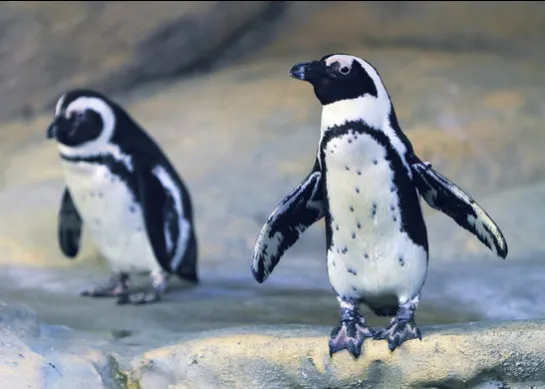
EAZA keeps a detailed record of each individual and their family relationships. This information is used to track animal movements between facilities in order to establish and maintain genetically healthy and sustainable populations. Thanks to this coordinated management, every penguin transfer contributes to the long-term conservation of the species.
As penguins are gregarious animals, the social bonds and affinities within the colony were also taken into account when allocating the birds to the various care facilities.
Two departures announced, paving the way for a peaceful retirement
The relocations took place in two stages: thirteen penguins were moved to La Palmyre Zoo (Charente-Maritime) in March, and the remaining eleven were transferred to Le PAL Wildlife Park (Allier) in September.
These partner organisations already have penguin colonies and provide suitable accommodation, making it easier for new arrivals to settle in.
Our penguin colony consists of individuals ranging in age from one year old—the two youngest, born at Nausicaa—to twenty-three years old, the oldest member of the group. The majority of the penguins are in their twenties.
In the best interests of the animals, and to avoid repeated journeys that would result in successive and potentially stressful periods of readjustment, it was decided that the relocation of the colony would be permanent, in consultation with the conservation programme coordinator and the partners.
A new colony
Once the work is complete, Nausicaá will open a brand-new enclosure dedicated to African penguins. Five times larger than the current enclosure, it will be able to accommodate up to thirty penguins.
A new colony will therefore be established in line with the recommendations of the conservation programme coordinator.
This will mark the start of a new chapter in the story of Nausicaá’s penguins, which is sure to be just as rich in stories as the one that has just come to an end.
Key figures
The Cape penguin is critically endangered in the wild. In 2023, the total number of breeding pairs was approximately 9,900, representing 19,800 mature individuals, according to the IUCN.
This figure compares with historical estimates of 141,000 breeding pairs in 1956/57.
Other articles
The welfare of sea lions: our day-to-day...
Biodiversity 3mn
Medical training, enrichment, dynamic exercises – find out w...
Daily care for the manta ray at Nausicaá...
Biodiversity 4mn
The manta ray fascinates visitors with its majestic appearan...
Discover the incredible medical training...
Biodiversity 5mn
How does medical training contribute to animal welfare?