Biodiversity Coral 3mn
Are fish queer?
Why do some species of fish change sex?

Are fish queer? The answer to this deliberately provocative question is that in some species of fish, gender is fluid.
This is mainly referred to as sequential hermaphroditism, i.e. the transition from one sex to the other, protandrous when the male becomes female or protogynous when, conversely, the female becomes male.
Protandric hermaphroditism
Le poisson-clown
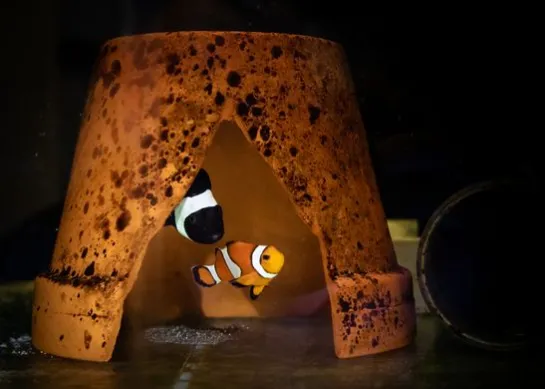
In clownfish, all individuals are born male, but it is the females that dominate. In a small group, the largest fish is a female. Next to her is a breeding male and a few smaller immature males.
If the female dies, the dominant male changes sex and takes her place, and the largest of the immature males becomes the breeding male. The other males are on a sort of "waiting list" and will take up a new position in the hierarchy as the group evolves.
Protogynous hermaphroditism
In other species, the sex change occurs in the opposite direction, with females becoming males. These changes can be seen in wrasses such as the bird wrasse or the humphead wrasse, or in groupers.
In fish living in a group formed by a male surrounded by females, such as wrasse, the transformation from female to male will take place when the female is large enough to be more fertile as a male. When the dominant male disappears, the largest female will transform to take his place in the harem.
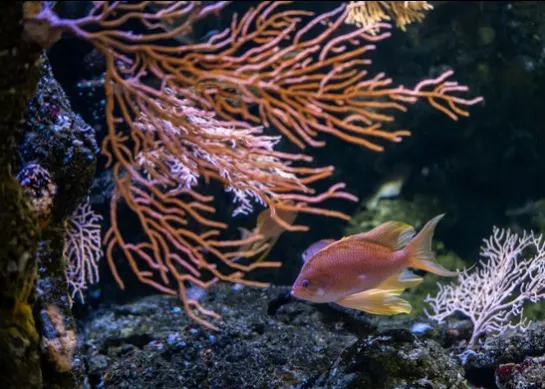
In the Anthias family, barber fish, like lyre-tailed barbers, are born female. When there is an imbalance between males and females within the group, the oldest females become males.
These sex changes occur to ensure the survival of the species and maximise the chances of reproduction.
(The male seahorse that incubates and gives birth to the young seahorses does not change sex, he just takes over part of the family burden!)
The influence of environmental factors on the sex of fish
Researchers have found that pollutants in the water can have a disruptive effect on the sex of fish.
Another influence on the sex of fish is water temperature. In some species, an increase in water temperature results in more individuals of the same sex being born.
The resulting imbalance in the male-female distribution within a species could threaten its survival.
Other articles
Life on the coral reef: when species liv...
Biodiversity 2mn
Living together in the coral ecosystem. Discover the inter-s...
What are the superpowers of mangrove ani...
Biodiversity 6mn
How do mangrove animals manage to live in such a unique envi...
How does coral reproduce?
Coral 3mn
How does a coral polyp become a reef?