In fact, it feeds on invasive glass anemones of the genus Aipitasia that can damage corals and plays an important role in the balance of coral reefs.
The peppermint shrimp is omnivorous and detritivorous and belongs to the cleaner shrimp family.

Arthropods or shellfish
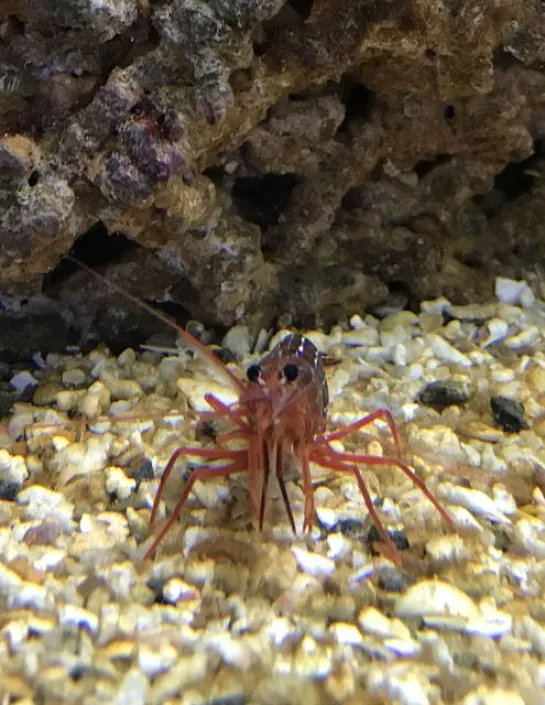
Identity card
It lives in the Atlantic Ocean, from the Caribbean to Brazil.
As a benthic animal, it lives close to the seabed. It is found between depths of 0 and 37 metres in tropical environment
This small shrimp measures no more than 5 cm on average.
The peppermint shrimp is omnivorous and detritivorous.
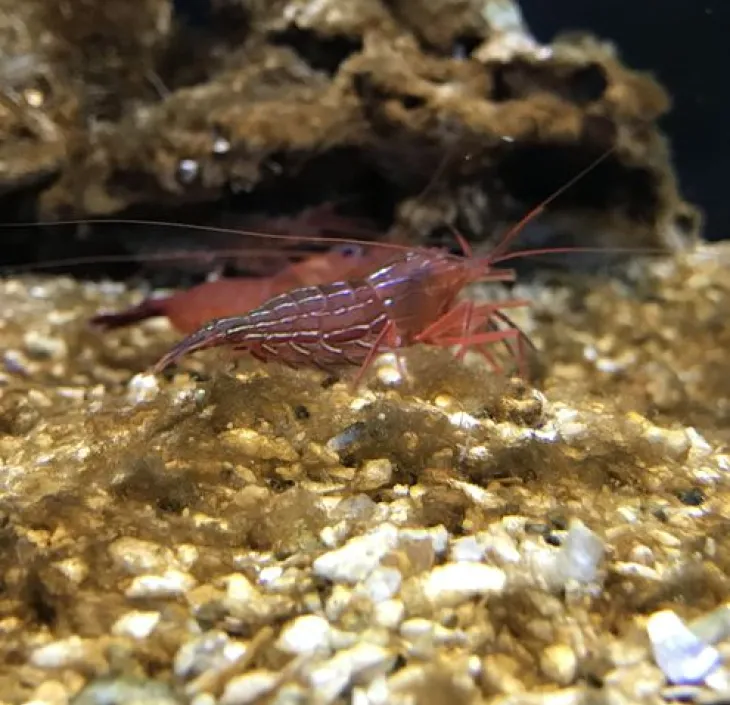
This shrimp, bred in Nausicaá, has joined the reef aquariums where it plays an important role.
In fact, it feeds on invasive glass anemones of the genus Aipitasia that can damage corals and plays an important role in the balance of coral reefs.
The peppermint shrimp is omnivorous and detritivorous and belongs to the cleaner shrimp family.
Biomimicry: the properties and constituents of shrimp shells have inspired the design of shrilk, a form of inexpensive and biodegradable plastic. Chitin, the element that makes up the shell of shrimp, is used in various fields such as medicine, cosmetics, surgery and wastewater filtration.
This shrimp is a benthic animal, which means that it lives close to the seabed. It is found between depths of 0 and 37 metres in tropical environments.
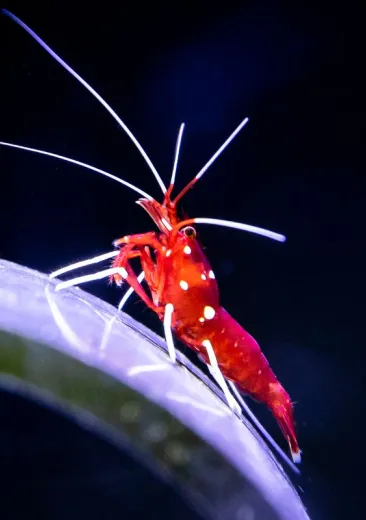
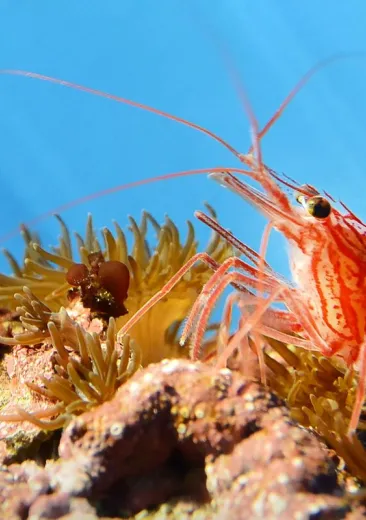
This small shrimp measures no more than 5 cm on average. The peppermint shrimp is a small tropical shrimp with longitudinal red stripes. This quiet and discreet shrimp lives in groups and is mostly active at night.
To grow, shrimp have to moult: their shell is replaced by a larger one. The peppermint shrimp reproduces at the time of moulting, before its new shell has had time to harden.
Besides growth and breeding, moulting allows the shrimp to replace a damaged limb and to get rid of organisms that might have become attached to its shell.
This shrimp is hermaphroditic, which means that it has both male and female organs. This shrimp is born male and then becomes female but still keeps functional male genitalia.
The Ocean Mag
In the spotlight
Comment la raie guitare fouisseuse va bénéficier des arrondis en caisse des visiteurs de Nausicaá.
Article
Ovipare ou vivipare aplacentaire, chez les raies, il existe plusieurs modes de reproduction.
Article
A new El Niño event, described as “very strong”, is set to occur from this spring onwards.