Pacific Chub Mackerel

Pacific Chub Mackerel

  Pelagic fish

Pacific Chub Mackerel

Identity card

Pacific Chub Mackerel

Scientific name:
Scomber colias
Family:
Scombridae
Class:
Actinopterygii
Phylum:
Chordata
Year of description:
Gmelin, 1789
IUCN Status:
Least Concern
Distribution:

Atlantic Ocean. Eastern and western coasts, including the Mediterranean and southern Black Sea. Replaced by Scomber japonicus in the Indo-Pacific.

Habitat:

Between 0 and 300 metres.

Size:

Up to 55 cm.

Diet:

It feeds on fish, cephalopods and seafood (especially copepods).

Longevity:

7 years

Pacific Chub Mackerel
 

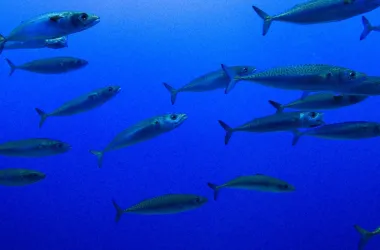
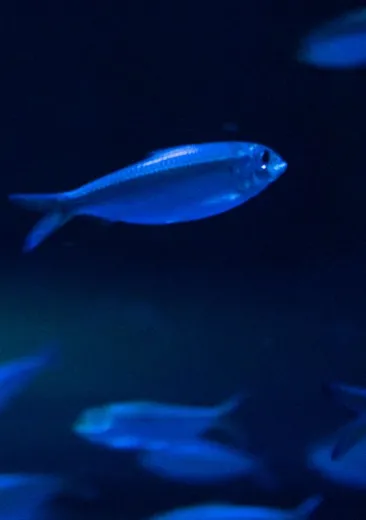
At Nausicaá, Pacific chub mackerel can be found in the Journey on the High Seas exhibition.

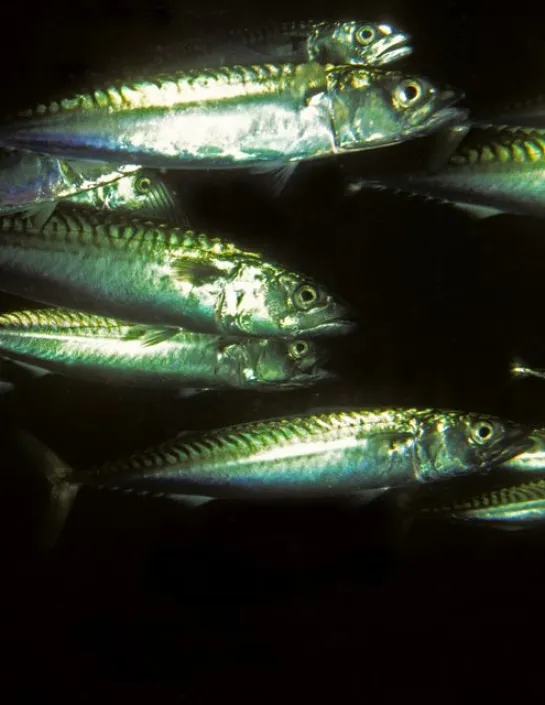
 They form a fascinating school that lives in a 10,000-m3 tank and crosses paths with other schooling fish such as Atlantic lookdown and snapper.
Where is the animal to be found?

It is a coastal pelagic species that congregates in schools when the fish reaches a size of 3 cm and is found at a depth of between 0 and 300 metres. Pacific chub mackerel live close to the seabed during the day and come up to the open sea at night to feed on copepods, fish, shellfish and squid. 

How can it be recognised? 

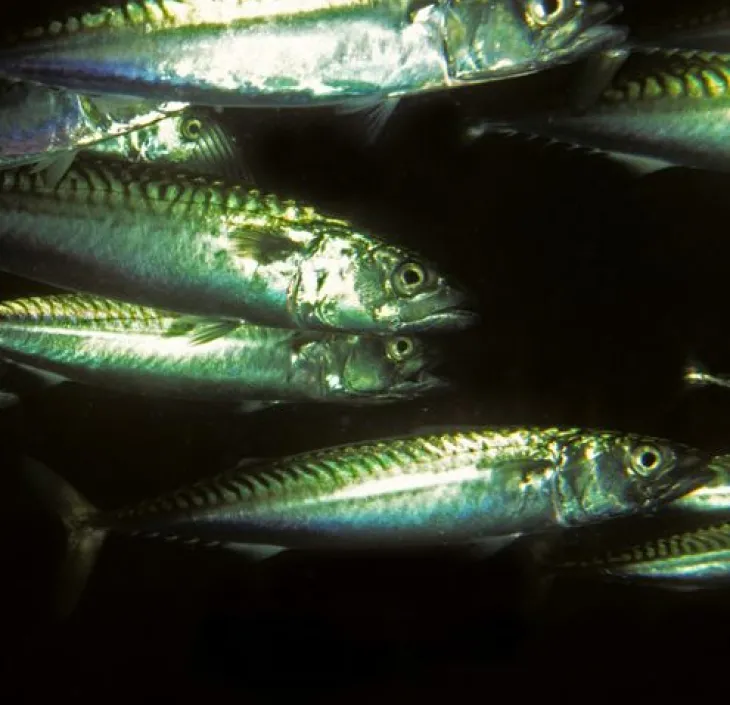
It can grow to a maximum size of 64 cm, but typically measures 30 cm. It has narrow stripes on its back. Atlantic populations (Scomber colias in this case) have stripes on their abdomens in contrast to Pacific populations.

What is distinctive about it? 

Pacific chub mackerel has an estimated lifespan of 7 years with maturity reached between 2 and 4 years.
During spawning, the female can produce between 100 and 400,000 eggs in several phases!

Threat and protective measure

Classed as LC – least concern by the UICN, Pacific chub mackerel is a commercially harvested species for human consumption: it is sold fresh, frozen, smoked or salted!

Where can I find it at Nausicaá?

JOURNEY ON THE HIGH SEAS

12 The great Ocean show

Pacific Chub Mackerel

The Ocean Mag

Browse through our Ocean Mag

In the spotlight

À la découverte des animaux marins avec la Voix du Nord

Pour son podcast Les ch'tites histoires, la Voix du Nord a rencontré l'équipage de Nausicaá.

Article

10 things you need to know about coral

Coral, the planet's largest builder, is a fragile and threatened animal.

Article

Why don't young fish look like adults?

In some tropical fish, the changes between birth and adulthood are so great that it is difficult to identify the young.