Le chauffet garibaldi

The Garibaldi damselfish

  Cold and temperate sea fish

The Garibaldi damselfish

Identity card

The Garibaldi damselfish

Scientific name:
Hypsypops rubicundus
Family:
Pomacentridae
Class:
Actinopterygii
Phylum:
Chordata
Year of description:
Gill, 1861
IUCN Status:
Least Concern
Distribution:

Waters off the coast of California.

Habitat:

Rocky bottoms and crevices, as well as in kelp forests, between 0 and 30 metres deep.

Size:

25 – 30 cm

Diet:

Small invertebrates.

Longevity:

30 years old.

le chauffet garibaldi
 

The Garibaldi is also called the Garibaldi damselfish.

Did you know?

Where is the animal to be found?

It lives at depths of between 0 and 30 m in the waters off the Californian coast. It can be found living on rocky bottoms or in crevices, as well as in kelp forests.

How can it be recognised?

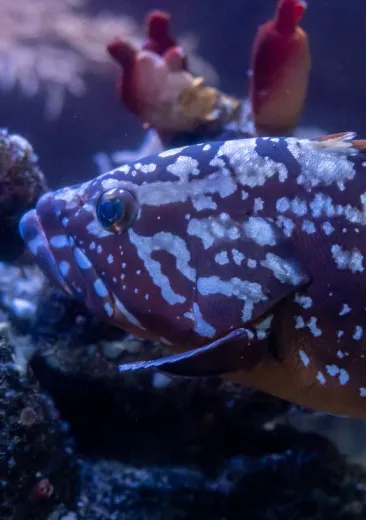
The Garibaldi has an orange, rather oval body. Juveniles have blue spots on their body and on the edges of their fins. This blue colour disappears with adulthood.

What is distinctive about it?

The Garibaldi damselfish is highly territorial and aggressive towards intruders entering its territory. During the breeding season, the male guarding the eggs will attack any living creature, even one much larger than himself, that comes too close to his nest.

Threats and conservation

This species is fully protected in California and may be present in certain protected marine areas in Mexico and the United States.

Where can I find it at Nausicaá?

Mankind and Shores

The Ocean Mag

Browse through our Ocean Mag

In the spotlight

Nausicaá à la COP17 : faire une place à l’océan dans les engagements pour la biodiversité

Nausicaá est présent à Erevan pour suivre les discussions de la COP17 et contribuer à faire entendre les enjeux liés aux écosystèmes marins.

Article

COP17 sur la biodiversité : où en sommes-nous des engagements pour la nature et l'océan ?

La 17e Conférence des Parties pour la biodiversité se déroule du 19 au 30 octobre 2026 en Arménie.

Article

What is El Niño?

A new El Niño event, described as “very strong”, is set to occur from this spring onwards.