Abyss 1mn
What is the difference between photosynthesis and chemosynthesis?
Understand how this chemical reaction works.

Photosynthesis, which forms the basis of food chains, involves the production of organic matter using energy from the sun. This is what plants do in the vegetable world and algae on the surface of the ocean.
The chemical reaction results from the combination of CO2 (carbon dioxide), water (H2O) and solar energy, which produces sugars and oxygen.
While photosynthesis uses the sun's energy, in the depths of the ocean where darkness reigns, the absence of light has long led to the belief that life could not develop there.
However, the discovery of hydrothermal vents in 1977 revealed the existence of an abundance of highly unusual animal life that could thrive in extreme conditions.
How was this possible?
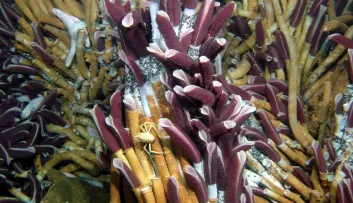
Deep down, around the hydrothermal vents, photosynthesis becomes chemosynthesis. Energy is no longer supplied by sunlight, but by the absorption of hydrogen sulphide molecules released by the hydrothermal vents. Bacteria feed on these molecules and transform them into organic matter, which is used as food by the animals living around the vents.
Photo : Ifremer
Abyss
What is a polymetallic nodule?
Abyss 2mn
Discover these mineral concretions, whose potential exploita...
Qu’est-ce qu’une cheminée hydrothermale ...
Abysses 1mn
Découvrir comment se forme cette structure minérale dans les...
Qu'est-ce qu'une dorsale océanique ?
Abysses 1mn
La dorsale océanique, une chaîne de montagnes sous la mer.
Geography of the abyss: what does the de...
Abyss 3mn
Can you imagine that beneath the surface of the ocean, there...
All about the abyss?
Abyss 3mn
The abyss is a mysterious environment because it is largely ...
The deep seabed, a hostile and uncharted...
Abyss 4mn
Total darkness, pressure and cold: extreme conditions to exp...
14 things you just have to know about th...
Abyss 7mn
Find out more about what lies beneath the surface, all the w...