Nausicaá's professions 4mn
Meet Constance, penguin keeper at Nausicaá
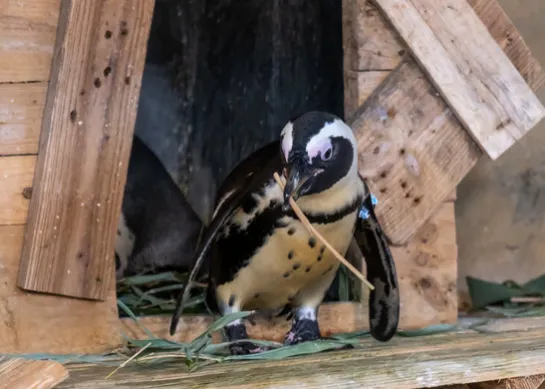
Constance is responsible for the African penguin colony.

Constance works as a carer in the Aquariology team at Nausicaá. She is responsible for the penguin colony. In 2025, between preparing meals, feeding, caring for the penguins on a daily basis, observing eggs and monitoring births, Constance answered our questions.
In 2026, she helped organise the colony’s departure, working alongside the teams at Nausicaá, the receiving facilities and EAZA, the European Association of Zoos and Aquaria.
Updated on 7 September 2026.
3 questions to Constance, responsible for the penguins at Nausicaá
Can you tell us more about the birth of baby penguins and how they develop?
At birth, the baby penguin measures between 10 and 12 cm and weighs around 70 g. The parents keep a close eye on their young and feed them until they are two or three months old. Once they are two months old, they are already as big as their parents and start to leave the nest to explore their territory.
Why is Nausicaá committed to preserving the African penguins?
The African penguin lives in South Africa and is a species that is particularly vulnerable to threats related to human activities. Due to climate change, the fish that penguins feed on are moving away as the water warms up, and they are also affected by overfishing. Penguin parents must therefore swim further and further to bring food back to their chicks, and many chicks starve to death while waiting for their return. Oil pollution, tourism and coastal construction, and accidental catches related to fishing further increase the pressure on penguin populations.
Predators such as seals, sharks and land animals are also a threat to this vulnerable species, which needs man for its conservation.
"The population, which numbered one million breeding pairs in the 1930s, has declined by more than 97%: less than 2% of the current penguin population now lives in the wild".
A growing colony
The work we've been doing since 2006 has enabled us to raise a colony that currently consists of around twenty adult penguins, all born in European parks and aquariums. The couples that have formed in the colony have been able to find the space they need at Nausicaá for their intimacy: since their arrival, they have given birth to around twenty babies. Nausicaá is taking part in a European conservation programme for African penguins. The young penguins join partner establishments in order to preserve a healthy genetic heritage.
"These births are essential for the preservation of the species: these new individuals will in turn enable other centres to expand their breeding programmes".
What are you doing for the penguins living in the wild in South Africa?
Nausicaá supports SANCCOB (Southern African Foundation for the Conservation of Coastal Birds), which works to preserve and rehabilitate oiled, injured, sick or orphaned seabirds. SANCCOB has a presence in South Africa, where most of its patients are Cape penguins. The association also carries out research, training and awareness-raising activities to help the penguins rebuild their colonies: every year, a thousand penguins are cared for and released back into their natural environment!
Nausicaá and its Endowment Fund are committed to raising funds to support SANCCOB's actions, and to promoting them in order to inform as many people as possible and raise their awareness of the need to preserve the African penguin.
"The donations collected at Nausicaá have already enabled SANCCOB to save 200 penguins, some of which have been released by Nausicaá teams on site.
These donations are also used to raise awareness of conservation through environmental education and to collaborate on research projects.
Sponsor an African penguin
Nausicaá and its Endowment Fund support the SANCCOB (Southern African Foundation for the Conservation of Coastal Birds) association, which works in South Africa to save African penguins and other seabirds. SANCCOB treats animals that have been injured, particularly during oil spills, and rescues and raises the chicks, releasing them back into the wild after a few months.