Blue Innovation 3mn
How can cod skin treat severe burns?
Fish skin is used to treat severe burns. From waste product to skin substitute, cod skin is being put to new use.

The tragic fire that broke out on New Year's Eve in Crans Montana at La Constellation bar left forty people dead and around a hundred injured, including some with severe burns. The treatment they are receiving involves innovative technology based on a rather unexpected material: cod skin.
Fish skin helps wounds to heal and acts as a skin substitute. It has the advantage of not being able to transmit diseases to humans, unlike substitutes derived from mammals such as pigs or cattle.
Fish skins therefore undergo less processing; they are cleaned and sterilised, thus retaining all their qualities, such as their collagen-rich structure and omega acids, which aid healing. Studies indicate faster healing, reduced pain, fewer dressing changes and lower treatment costs.
An Icelandic company, Kerecis, is developing a skin substitute based on the fact that fish skin has "a dermis, epidermis and subcutaneous tissue", just like human skin. It recovers cod skins, fished in large quantities in the North Atlantic, which are transformed from waste into a resource for medicine.
Fish skin similar to human skin
This raw material has a wet mesh structure, is rich in collagen and naturally adheres to the skin. "From an evolutionary point of view, our skin is identical to that of fish, except that the scales have turned into hair on human skin," explains Fertram Sigurjonsson, the Icelandic scientist who developed this invention.
Applied to the lesion, the skin substitute protects the skin from contact with the air and prevents it from drying out, thus promoting healing.
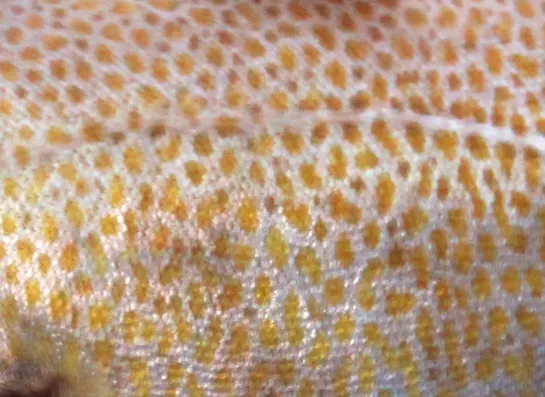
Another species of fish is also used to produce acellular fish skin grafts (AFS). This is the Nile tilapia (Oreochromis niloticus) native to the Nile basin in East Africa, whose skins come from local fish farms.
Another innovation from the sea also helps heal severe burns: the Hemarina dressing, a gel containing haemoglobin molecules from a marine worm, the lugworm, which can carry forty times more oxygen than human haemoglobin. These dressings recharge with oxygen and "transfer air from the top of the dressing to the wound cells that need it," explains Franck Zal, founder of the Breton company. This accelerates healing in a moist environment without forming a scab, but rather new skin. This treatment has so far been used experimentally in several very serious cases and is currently being evaluated before being authorised for marketing.